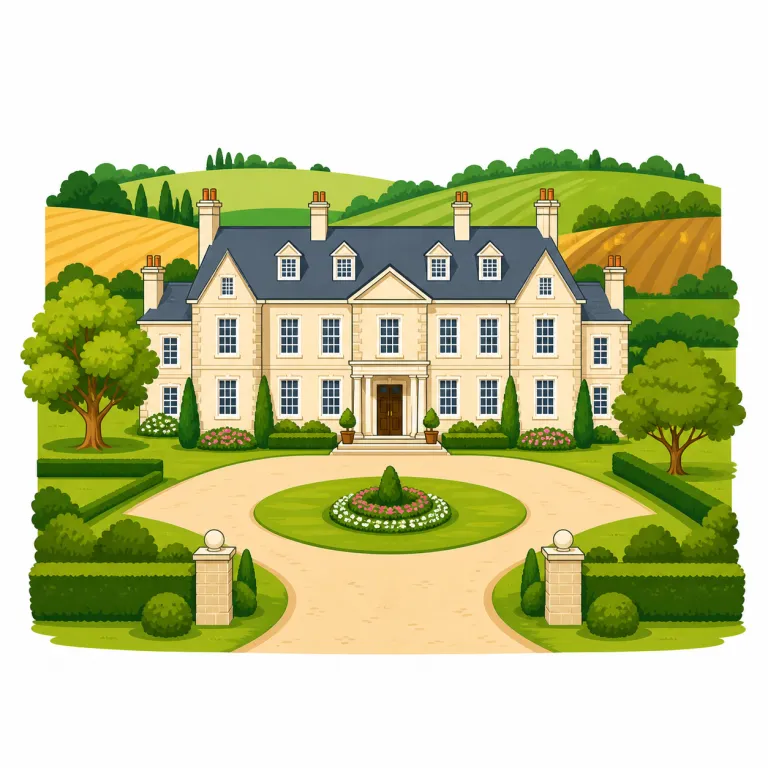
領主館、大邸宅
noun 名詞特に英国で、荘園の領主が住んだ大きな邸宅、またはそのような由緒ある田舎の屋敷を指します。manor house ともいい、土地制度としての「荘園」ではなく、その中心となる建物そのものを表します。
貴族や領主が支配・所有していた広大な土地や領地。中世ヨーロッパで領主が統治していた地域を指す。
A manor is a large country house, usually with land around it. The word is often used in historical contexts for the home of a lord or wealthy family, and it can also refer to the estate connected to that house.
mansion を知っているなら、manor は『大きな館』から一歩進んで、『その館を中心に広がる領主の土地』まで含む語だと覚えると定着しやすい。manor house は館そのもの、the lord of the manor はその土地を支配する領主、という組み合わせが典型。単なる豪邸を指す mansion や、一般的な estate よりも、中世ヨーロッパの封建的な領地という歴史色が強い。建物だけで終わらず、周囲の農地や支配関係まで一緒に思い浮かべると混同しにくい。
Think of `manor` as a history word, not just a big house. It often goes with `lord of the manor` and the `manorial system`, so picture land, farms, and villagers around the lord's home. The memory key is: one center building, but a whole area under one lord.
The nobleman owned a large manor with vast fields.
その貴族は広大な畑のある大きな領地を所有していた。
The manor included several villages and the farmland around them.
その荘園にはいくつかの村と、その周囲の農地が含まれていた。
In medieval times, peasants worked on the manor for the lord.
中世には、農民は領主のために領地で働いていた。
文脈によって、次の意味でも使われます。
特に英国で、荘園の領主が住んだ大きな邸宅、またはそのような由緒ある田舎の屋敷を指します。manor house ともいい、土地制度としての「荘園」ではなく、その中心となる建物そのものを表します。
古フランス語 manoir「住まい・領主の館」を経て、ラテン語 manere「とどまる・住む」に由来します。もとは人が住み続ける場所という感覚で、そこから領主の居館と土地を含む「荘園」を指すようになり、mansion, remain が同根です。
Manor came through Old French "manoir," meaning "dwelling" or "lord's residence," from Latin "manere," meaning "to remain" or "stay." The word first suggested a place where people live or stay. In English it became the name for a lord's house together with the estate around it, and it is related to "mansion" and "remain."
この英単語をクイズで覚えよう