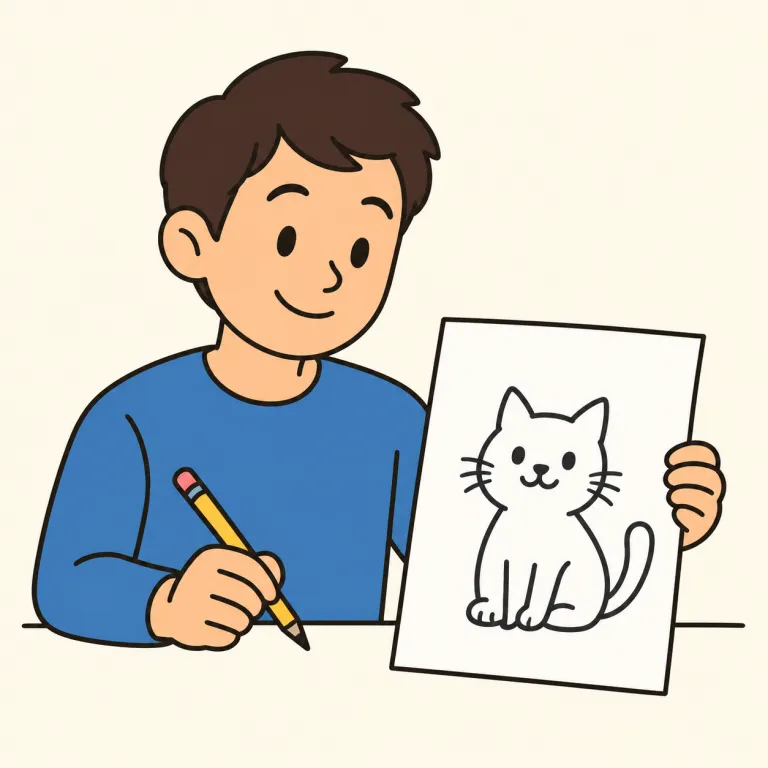
描いた
解説 Definition
drew は draw(描く)の過去形です。絵や線、図などを過去に描いたことを表します。
Made a picture, line, map, or design with a pen, pencil, or similar tool. Drew is the irregular past-tense form of draw and refers here specifically to an act of creating a visual representation in the past.
覚え方のコツ Memory Tip
drew は draw「描く」の不規則過去形で、drawed にはなりません。発音も draw /drɔː/ に対して drew /druː/ と母音が変わり、過去分詞は drawn です。線を紙の上に「引く」動作が絵や地図を描く意味につながったと捉え、drew a cat/map/picture のように、過去に完成した描画と結びつけて覚えます。
Drew is the irregular past tense of draw, so do not say drawed. Notice the vowel change: draw is pronounced /drɔː/, while drew is /druː/. The past participle is different again: drawn. For this meaning, picture someone pulling a pencil across paper to make a line, an image that connects with the word’s older core sense of pulling. Learn it in short combinations such as drew a cat, drew a map, or drew a picture. These phrases keep the target meaning separate from other senses of draw, such as pulling, attracting, or taking something out.
例文
He drew a cat.
彼は猫を描きました。
I drew a map for my friend.
私は友人のために地図を描きました。
The child drew a big sun in the sky.
その子どもは空に大きな太陽を描きました。
drew の類義語・関連語
drew の語源・成り立ち Etymology
古英語 dragan(引く・引きずる)の過去形。線を「引く」動作から「描く」意味が生まれた。draw には「引き出す・引き寄せる」など多義があるが、すべて「引く」が核。関連語:drag(引きずる)、drawer(引き出し)。
Drew is the inherited irregular past-tense form of draw. Draw comes from Old English dragan, meaning “to pull” or “to drag,” and is related historically to drag. The artistic sense developed from the action of pulling or tracing a tool across a surface to create lines. English retained an irregular pattern for the verb: draw in the present, drew in the past, and drawn as the past participle.
同じレベルの語彙をもっと
外部辞書で調べる
この英単語をクイズで覚えよう