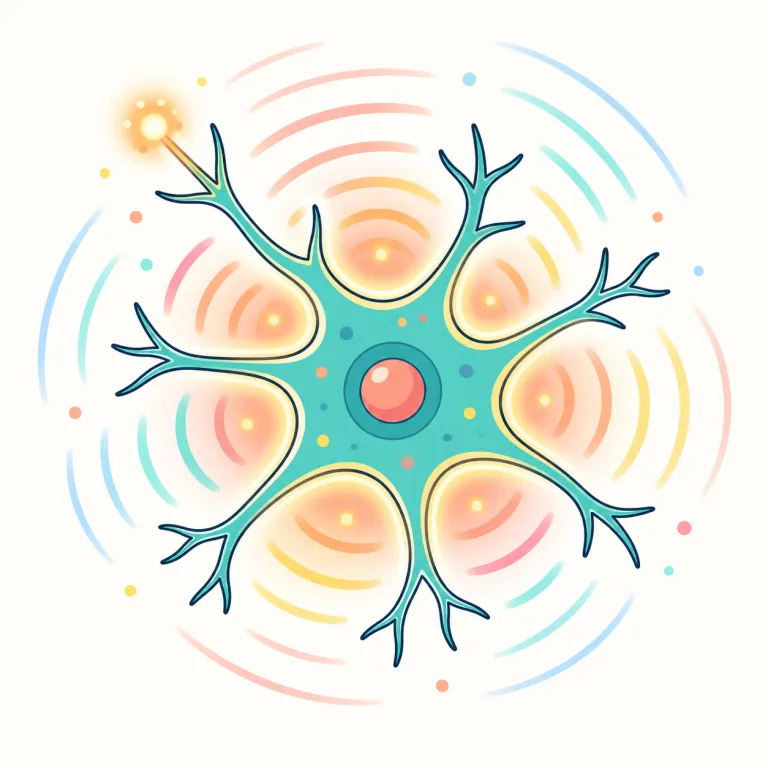
興奮性
解説 Definition
刺激に対して容易に興奮する傾向。生物学や心理学で、神経系が刺激に反応しやすい性質を指す。
Excitability is the quality of becoming excited or reacting very easily and quickly. It is often used in psychology, biology, and medicine to talk about strong emotional response or how easily nerves and muscles respond to stimulation.
覚え方のコツ Memory Tip
excitability は excite「興奮させる」→ excitable「興奮しやすい」→ excitability「その性質」と3段階で覚えると定着しやすいです。-ity は ability, stability などと同じく『性質・状態』を名詞化する語尾。excitement が一時的なワクワクを指しやすいのに対し、excitability は神経や人が刺激に反応しやすい“傾向そのもの”。high excitability, neuronal excitability の形で見て、『反応のしやすさ』と結びつけると忘れにくくなります。
See `excitability` as `excite + -ability`: the ability to be excited or triggered. In science texts, it often appears with `neuronal` or `membrane`, so connect it with cells that react easily. `High excitability` and `low excitability` are useful pairs to remember.
例文
The excitability of neurons increased under stress conditions.
ストレス状況下ではニューロンの興奮性が高まった。
The study measured children's excitability after exposure to loud noises.
その研究では、大きな音にさらされた後の子どもたちの興奮しやすさを測定した。
The drug affects the excitability of the central nervous system.
その薬物は中枢神経系の興奮性に影響を及ぼす。
excitability の類義語・関連語
excitability の語源・成り立ち Etymology
excitability は excitable に -ity「性質」が付いた語で、excitable は excite + -able です。excite は古フランス語経由でラテン語 excitare(ex-「外へ」+ ciere「動かす」)に由来し、「かき立てられやすさ」から「興奮性」と分かります。関連語は excite, excitation。
Excitability is formed from `excitable` plus `-ity`, meaning a quality or state. `Excitable` comes from `excite`, which entered English through French from Latin `excitare`, built from `ex-` "out" and a verb meaning "to set in motion." The idea is of being easily stirred up or set into activity, which led to the modern sense of readiness to respond strongly.
同じレベルの語彙をもっと
外部辞書で調べる
この英単語をクイズで覚えよう