えいたんごクイズ

irritability

/ˌɪrɪtəˈbɪləti/

意味一覧 (3件)

noun

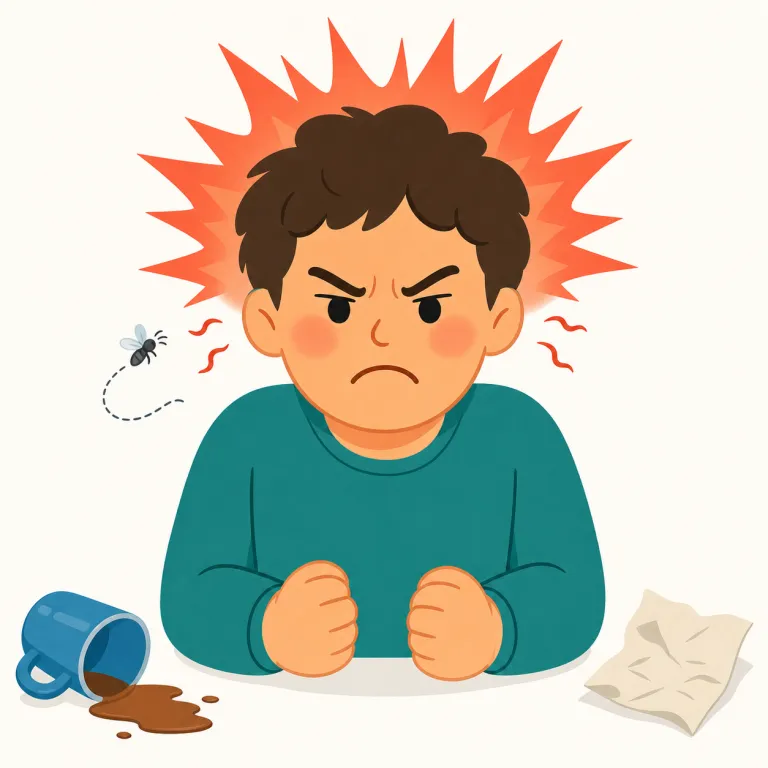
いらだち、おこりっぽさ

解説 Definition

些細なことや不快な刺激に対して、いらだったり腹を立てたりしやすい性質や状態を指す語。日常会話では気分がささくれている様子を表し、医療・心理の文脈では不安、疲労、ホルモン変化などに伴う易刺激性や情緒の不安定さを述べるときにも使われる。

Irritability is the tendency to become annoyed, impatient, or angry easily. It is commonly used for a person's mood or as a symptom in health and psychology.

覚え方のコツ Memory Tip

irritability は irritate「いら立たせる」→ irritable「いら立ちやすい」→ irritability「いら立ちやすさ」とつなげて覚えます。-ity は性質・状態を名詞にする語尾です。一回の怒りなら anger や annoyance が近く、irritability は小さな音、待ち時間、疲れなどに反応して不機嫌・攻撃的になりやすい傾向や状態を表します。

Learn it through the word family: `irritate`, `irritable`, and `irritability`. The ending `-ity` turns an adjective into a noun for a quality or state. `Irritability` is not one moment of anger, but a tendency to become annoyed easily.

例文

The patient's irritability was a symptom of his underlying anxiety disorder.

その患者のいらだちは、根底にある不安障害の症状の一つだった。

Hormonal changes during puberty can cause irritability in teenagers.

思春期のホルモン変化は、十代の若者にいらだちを引き起こすことがある。

His irritability made it difficult for him to maintain healthy relationships with others.

彼の怒りっぽさのせいで、他人と健全な関係を保つのが難しかった。

noun

いらいら

(意味 2)

解説 Definition

些細なことで怒ったり、いらいらしたりしやすい気質。不愉快になりやすく、我慢強さに欠ける傾向。

例文

His irritability increased as he went longer without sleep.

彼は眠らずに長く過ごすにつれて、ますますいらいらするようになった。

The patient's irritability was a symptom of the underlying illness.

患者の易刺激性は基礎疾患の症状だった。

Chronic stress can lead to increased irritability in daily interactions.

慢性的なストレスは日常的な相互作用でいらいらしやすくなることにつながる可能性がある。

noun

過敏性かびんせい易刺激性いしげきせい

(意味 3)

解説 Definition

外からの刺激に対して、細胞・神経・皮膚などが反応しやすい性質を指す語。医学・生理学の文脈で、痛み、光、薬品、炎症などへの反応の強さを述べるときによく使われる。

Irritability is the quality of reacting easily to outside stimulation. In medicine and physiology, it is often used for cells, nerves, muscles, or skin that respond strongly to things such as pain, light, chemicals, drugs, or inflammation. It does not mainly mean an angry mood here. Compared with sensitivity, irritability often suggests that a stimulus causes a clear reaction more easily.

覚え方のコツ Memory Tip

irritability は irritate「刺激する・刺激して反応を起こす」に、性質を表す -ability が付いた名詞と考えると覚えやすいです。ここでは人が怒りっぽいという感情面ではなく、nerve irritability や skin irritability のように、神経・筋肉・皮膚などが刺激に反応しやすい性質を表します。sensitivity よりも「刺激されて反応が出る」感じが強い語です。

You can remember irritability as irritate plus -ability, meaning "the quality of being easily irritated or stimulated." In this word, think about physical response, not an angry personality. Phrases like nerve irritability or skin irritability show that it describes how easily nerves, muscles, or skin react to a stimulus. It is stronger than sensitivity because it suggests that a stimulus actually causes a reaction.

例文

The doctor noted increased skin irritability after the chemical exposure.

医師は化学物質への曝露後、皮膚の過敏性が高まっていると記録した。

Nerve irritability can rise when the tissue is inflamed.

組織に炎症があると、神経の易刺激性が高まることがある。

The report discussed muscle irritability in response to electrical stimulation.

その報告書は電気刺激に対する筋肉の易刺激性について論じていた。

irritability の語源・成り立ち Etymology

irritability は irritate「刺激していら立たせる」に、性質を表す -ability が付いた語です。irritate はラテン語 irritare「刺激する・怒らせる」にさかのぼり、「刺激に反応しやすい性質」から「イライラしやすさ」になりました。関連語は irritable, irritant。

Irritability comes from irritate plus the noun ending -ability. Irritate goes back to Latin irritare, meaning "to excite, provoke, or annoy." The idea moved from being easily stirred or stimulated to a tendency to become annoyed or upset. Related words include irritable and irritant.

外部辞書で調べる

この単語をシェア

この単語を英単語クイズで覚えよう