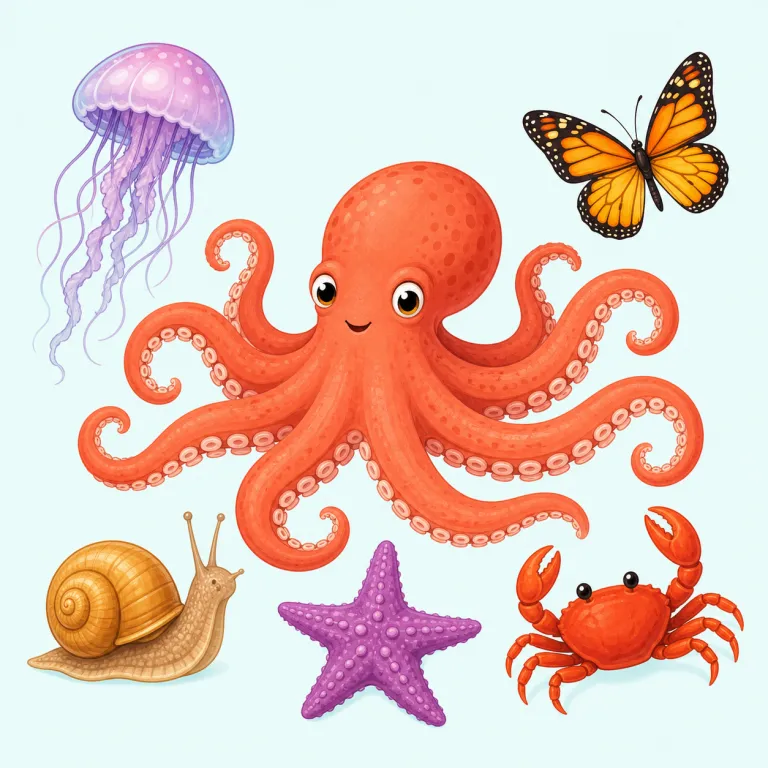
無脊椎動物
解説 Definition
無脊椎動物は脊骨・脊椎がない動物の総称です。昆虫、軟体動物、棘皮動物など、脊椎骨を持たないあらゆる動物を分類する生物学的用語です。
An invertebrate is an animal that does not have a backbone. The word is used in biology for animals such as insects, worms, and jellyfish. It is a scientific classification term, opposite to vertebrate.
覚え方のコツ Memory Tip
まず vertebrate「脊椎動物」を知っていると覚えやすい語です。in- は「ない」なので、invertebrate はそのまま「脊椎がない動物」。vertebra は「背骨」で、vertical などの“まっすぐ軸が通る”語感と結びつけると芯のある体のイメージが残ります。生物分類で vertebrate / invertebrate を対で覚えると定着しやすく、昆虫・貝・タコのように“背骨が見当たらない側”をまとめる語だと押さえると使いやすいです。
This word is easy if you already know `vertebrate`. Add `in-` meaning "not," and `invertebrate` becomes the animal group without a backbone. Learn it as a pair, `vertebrate / invertebrate`, so the contrast does the memory work for you.
例文
Invertebrates make up the majority of animal species on Earth.
無脊椎動物は地球上の動物種の大多数を占めている。
The ocean is full of fascinating invertebrates.
海は魅力的な無脊椎動物で満ちている。
Scientists study invertebrates to understand ecosystem health.
科学者たちは生態系の健全性を理解するために無脊椎動物を研究する。
invertebrate の類義語・関連語
invertebrate の語源・成り立ち Etymology
invertebrate は in-「ない」+ vertebra「背骨」+ -ate に分けられ、語源はラテン語 vertebra にさかのぼります。文字どおり「背骨をもたないもの」で、形を分解すると意味がそのまま見える語です。関連語は vertebra、vertebrate です。
Invertebrate is built from in- "not" and vertebrate, which comes from Latin vertebra, "joint" or "backbone." The word was formed to mean literally "without a backbone." Its history is very transparent, and it is closely related to vertebra and vertebrate.
同じレベルの語彙をもっと
外部辞書で調べる
この英単語をクイズで覚えよう