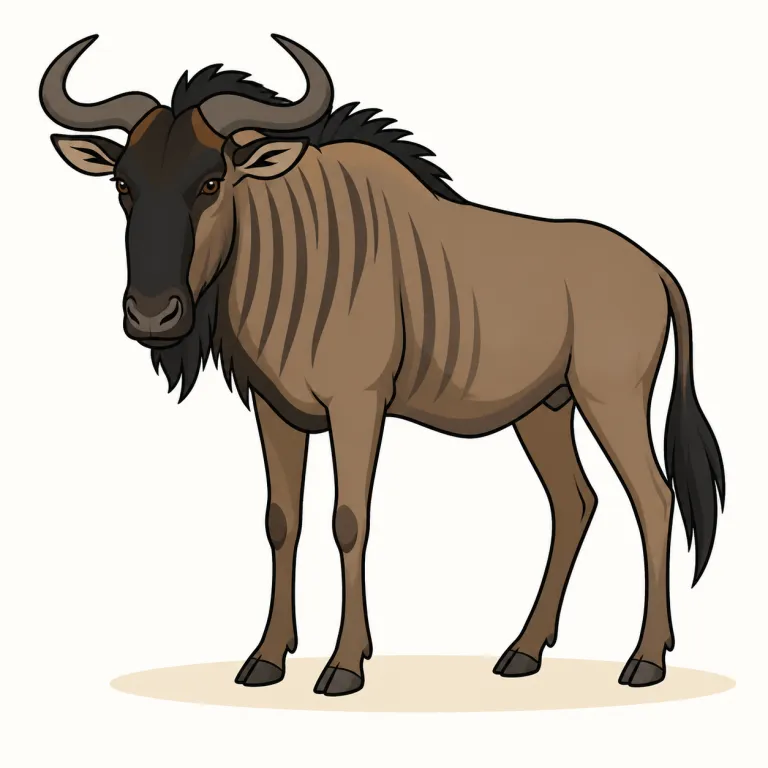
ヌー
解説 Definition
ヌーはアフリカの広大な草原に暮らす大型の草食動物で、ずんぐりした体躯に牛に似た角を持っています。毛皮には灰色や黒の縞模様があり、身体の前部が大きく盛り上がって見えます。雨季と乾季を分けて群れで大規模に移動し、水や青草を求めて遠くへ旅する習性があります。
A gnu is a large African animal with a heavy body and curved horns, also called a wildebeest. It lives on grasslands and often moves in large groups. The word is mainly used in nature, wildlife, and biology contexts.
覚え方のコツ Memory Tip
まず発音が /nuː/ で、先頭の g を読まない珍しいつづりをセットで覚える。意味は細かい説明より、「アフリカの草原で大群になって移動する、角のある牛っぽい草食獣」という映像で固定すると残りやすい。英語では wildebeest とほぼ同じ動物名として出るので、gnu を見たら“サバンナ・群れ・大移動”を即連想するのがコツ。buffalo や antelope の一般名ではなく、特定の動物名だと整理しておくと混同しにくい。
The key memory point is the spelling and sound: `gnu` is pronounced like `new`, with a silent `g`. Fix it in your mind with the image of large herds moving across the African grasslands. English also uses `wildebeest` for the same animal. So when you see `gnu`, think `silent g + savanna herd animal`.
例文
The gnu migrates across the African savanna in large herds.
ヌーはアフリカのサバンナを大きな群れで移動する。
A gnu is also known as a wildebeest.
ヌーは「ワイルドビースト」という名でも知られている。
The tourist saw a striking gnu with its distinctive curved horns during the safari.
観光客はサファリ中に、特徴的な湾曲した角を持つ印象的なヌーを見た。
gnu の類義語・関連語
類義語
gnu の語源・成り立ち Etymology
gnu はオランダ語 gnoe を経て、南アフリカのコイコイ語系の動物名に由来するとされ、接頭辞などの分解はありません。gnoe や blue gnu にも同じ名が残り、英語の内部構造より『その土地でその獣を何と呼ぶか』が意味の出発点だと分かります。
Gnu came into English through Dutch gnoe from a southern African language, probably Khoikhoi. It is not built from smaller English parts. The word kept the local animal name, so its history is mainly about borrowing a native term into European languages and then into English.
同じレベルの語彙をもっと
外部辞書で調べる
この英単語をクイズで覚えよう