ホモ接合性の
解説 Definition
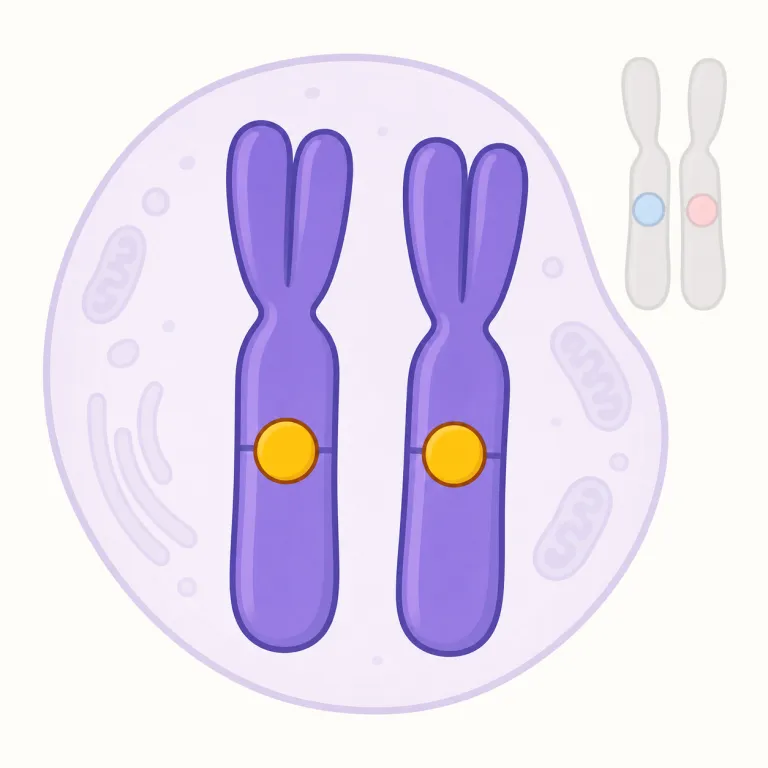
遺伝学で、ある遺伝子座の両方の対立遺伝子が同一であること。同型接合の状態。
Homozygous is a biology word describing an organism that has two identical forms of a gene. It is used in genetics when discussing inherited traits and DNA. This is a technical term mainly seen in science contexts.
覚え方のコツ Memory Tip
homo- は homogeneous などと同じく「同じ」の感覚でつかむ。遺伝では heterozygous と対で出ることが多いので、まず「hetero=異なる、homo=同じ」の軸を固定する。homozygous は『同じ対立遺伝子が2つそろう』状態で、AA や aa のように同じ文字が並ぶ図を頭に置くと定着しやすい。Bb のような mixed pair は heterozygous。教科書の be homozygous for A も「Aでそろっている」と読めば覚えやすい。
Use the contrast with `heterozygous`. `Homo-` means "same," while `hetero-` means "different." Picture `AA` or `aa` as a matching pair, and that image will help you remember `homozygous`.
例文
The organism was homozygous for the recessive allele, expressing the trait fully.
その生物は劣性対立遺伝子についてホモ接合性であり、形質が完全に発現していた。
Individuals homozygous for a harmful recessive allele may be more susceptible to a genetic disorder.
有害な劣性対立遺伝子についてホモ接合性の個体は、遺伝性疾患にかかりやすくなる場合がある。
The breeder selected homozygous plants to ensure uniform offspring.
育種家は均一な子孫を確保するためにホモ接合性の植物を選抜した。
homozygous の類義語・関連語
紛らわしい語
homozygous の語源・成り立ち Etymology
homozygous は homo-「同じ」+ -zygous「対になった」から成り、どちらもギリシャ語系で、後者は zygon「くびき・結合」に由来します。zygote や heterozygous も同根で、文字どおり『同じものが対になっている』ので、同一対立遺伝子をもつ状態を表します。
Homozygous comes from Greek-based parts: homo- meaning "same" and -zygous meaning "paired" or "joined." The second part is related to Greek zygon, meaning "yoke," an object that joins two things together. The word was formed in science to describe a pair that is the same. Related words include zygote and heterozygous.
同じレベルの語彙をもっと
外部辞書で調べる
この英単語をクイズで覚えよう