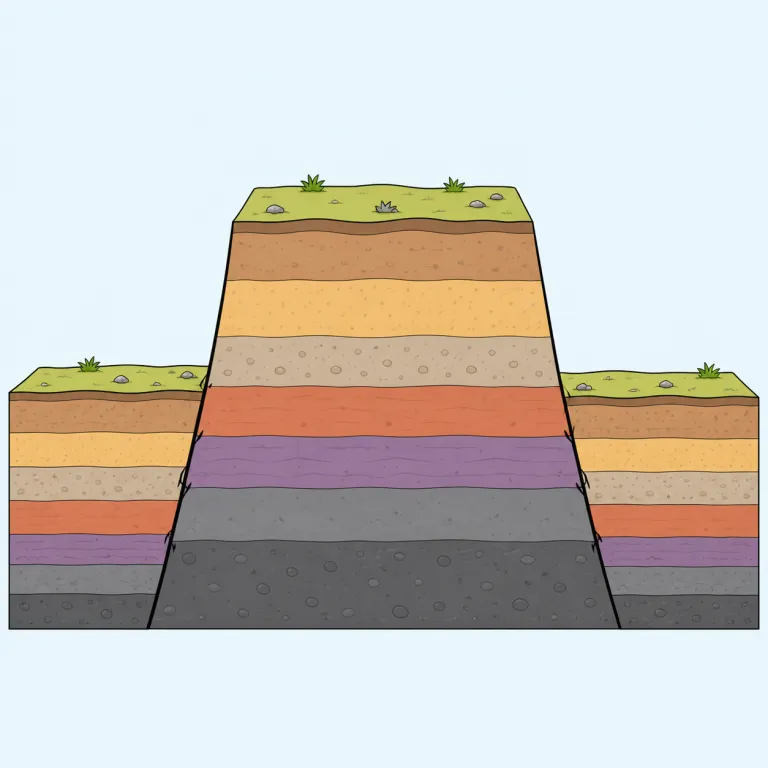
horst
horst はTOEIC 860・TOEFL 80・IELTS 6.5レベルの英単語で、「地塁」という意味があります。発音記号は /ˈhɔːrst/ です。
地塁
解説 Definition
断層に挟まれ、両側の土地より高くなった地塊を指す地質学用語です。断層運動によって形成された地形を説明するときに使われます。
A horst is a raised area of the earth's crust that stands higher than the land on both sides because of movement along faults. It is a technical geology term used when talking about mountains, landforms, and tectonic activity. This word is mostly used in scientific writing.
使い方 Usage
- 可算名詞で、一つなら a horst、複数なら horsts。地形や断層運動を扱う科学的な文章で使います。 It is countable: a horst for one, horsts for more than one. It appears in scientific writing about landforms and fault movement.
使い分け Common distinctions
- horst は地塁、graben は地溝です。断層に挟まれた地塊の高低を対比するときに使います。 A horst is the higher fault-bounded block; a graben is the lower one. The terms contrast the heights of blocks between faults.
覚え方のコツ Memory Tip
horst と graben を対で覚えます。断層の間で高く残る地塊が horst、低くなる地塊が graben。断層に挟まれた岩のかたまりが高くなっている図を思い浮かべましょう。
Remember horst together with graben: a horst is the higher block between faults, while a graben is the lower block. Picture a block of rock standing higher between two faults.
例文
Geologists study horsts to understand the tectonic movements of the Earth's crust.
地質学者は地殻の構造運動を理解するために地塁を研究します。
This mountain range is actually a horst created by ancient faulting.
この山脈は実は古い断層運動によって形成された地塁です。
horst の類義語・関連語
類義語
対義語
horst の語源・成り立ち Etymology
horstは地質学でドイツ語Horstから借りた語で、原義は「盛り上がった塊・高まり」に近い語です。周囲が落ち込む中で一部だけ持ち上がって残る地塁の姿を、そのまま名にしたわけで、英語のhurstや地名の-hurstも同系の「小高い場所」を表します。
Horst was borrowed into geology from German Horst. The older sense was something like a raised mass or height, which fits the geological idea of a block of land left standing higher than the land around it. It is related to English hurst, seen in place names, which also refers to a wooded hill or raised ground.
同じレベルの語彙をもっと
TOEIC 860の一覧へ →外部辞書で調べる
この英単語をクイズで覚えよう