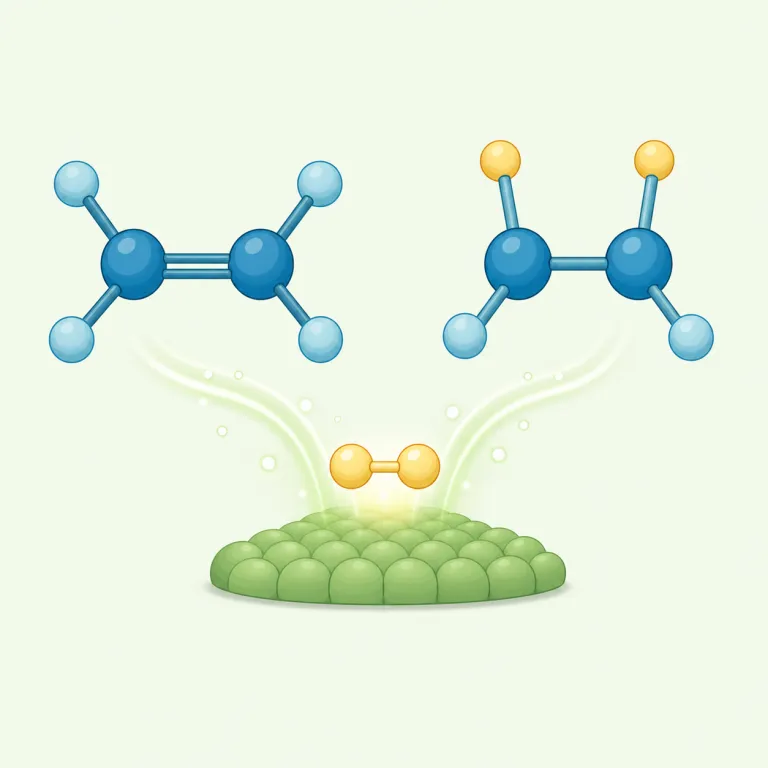
水素化
解説 Definition
化学反応により物質に水素を付加する工程。油脂の硬化などに用いられる。
Hydrogenation is a chemical process in which hydrogen is added to another substance. It is commonly used in chemistry and industry, for example when changing oils into more solid fats or altering chemical compounds. This is a technical scientific term.
覚え方のコツ Memory Tip
hydrogenation は hydrogen(=水素)がまず核。そこに -ation が付くと「その作用・工程」という名詞になり、information / creation と同じ型です。つまり「水素を加える工程」と取れば覚えやすい。化学では add hydrogen の場面、特に oils undergo hydrogenation のように油を硬化させる文脈で出やすい。hydration は「水を加えること」なので、hydro- の見た目だけで混同しないよう注意。
Start from `hydrogen`, then notice `-ation`, a common ending for a process, like in `creation` or `formation`. So the whole word means a process involving hydrogen. Keep it separate from `hydration`, which is about water, not hydrogen.
例文
Hydrogenation of vegetable oils converts them into solid fats like margarine.
植物油は水素化によって、マーガリンのような固形脂肪に変わる。
Partial hydrogenation can produce harmful trans fats as a byproduct.
部分的な水素化は有害なトランス脂肪を副産物として生成することがある。
The chemical plant invested in a new hydrogenation reactor to increase production capacity.
化学工場は生産能力を向上させるため、新しい水素化反応器に投資した。
hydrogenation の類義語・関連語
hydrogenation の語源・成り立ち Etymology
hydrogenation は hydrogen「水素」に名詞化の -ation が付いた語です。hydrogen はフランス語 hydrogène 由来で、ギリシャ語 hydro-「水」+ -gen「生み出すもの」から成り、関連語に hydroelectric や oxygen があるので、「水を生む元素を加えること」から水素化の意味だと理解できます。
Hydrogenation is built from hydrogen plus the noun ending -ation. Hydrogen comes from French hydrogène, based on Greek hydro- "water" and -gen "producing," literally meaning "water-forming." From that, hydrogenation came to mean the process of adding hydrogen. Related English words include hydroelectric and oxygen.
同じレベルの語彙をもっと
外部辞書で調べる
この英単語をクイズで覚えよう