風下
解説 Definition
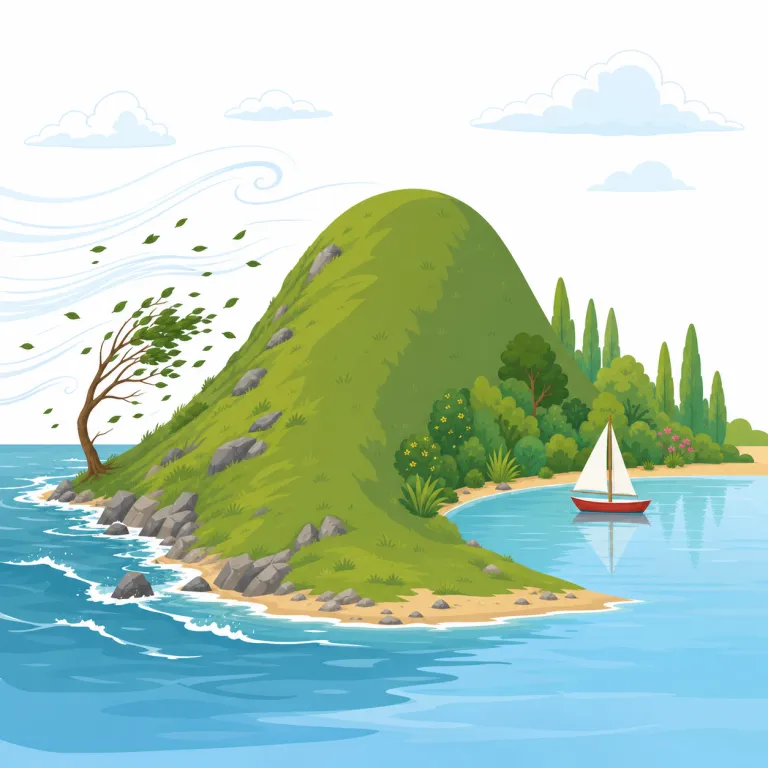
風が吹いてくる方向の反対側、すなわち風から遠ざかる方向を指します。航海や天候用語として使われ、風に背を向けた側を意味します。帆船の操舵や気象現象の説明に頻繁に使用されます。
Leeward means the side or direction that is away from the wind. It is used in sailing, weather, and geography to describe a place that is more protected from strong wind. As a noun, it refers to that sheltered side.
覚え方のコツ Memory Tip
まず -ward は「〜の方向へ」。eastward, homeward, backward などと同じ形なので、leeward も「lee 側の方向」と見れば形は覚えやすいです。意味は必ず windward と対で固定すると残ります。windward が風を正面に受ける側、leeward はその反対で、風を受けにくい風下の側。航海や天気では the leeward side, a leeward coast のように「風を避ける側」として出やすいので、『windward と反対』をまず核にすると混同しません。
The ending `-ward` means “toward a direction,” like in `backward` or `homeward`. Learn `leeward` together with its opposite, `windward`: if `windward` faces the wind, `leeward` is the sheltered side away from it. Phrases like `the leeward side` help fix that contrast in memory.
例文
The ship sailed to leeward of the island.
船は島の風下を航行した。
The slope to leeward receives less rainfall than the windward slope.
風下にある斜面は、風上側の斜面より降雨が少ない。
We anchored to leeward of the island for shelter.
風を避けるため、島の風下に停泊しました。
leeward の類義語・関連語
leeward の語源・成り立ち Etymology
leeward は lee「風を避ける側」と -ward「…の方向へ」から成り、lee は古英語 hleo「避難所・陰」に由来します。leeway や lee shore と同じ lee を含み、「風から守られる側へ向いた場所」と思うと、「風下」の意味が感覚的につかめます。
Leeward is made from lee and -ward, meaning "toward a direction." Lee comes from Old English hleo, meaning "shelter" or "cover," especially from wind. So the word originally meant the side turned toward shelter from the wind. Related forms include lee shore and leeway.
同じレベルの語彙をもっと
外部辞書で調べる
この英単語をクイズで覚えよう