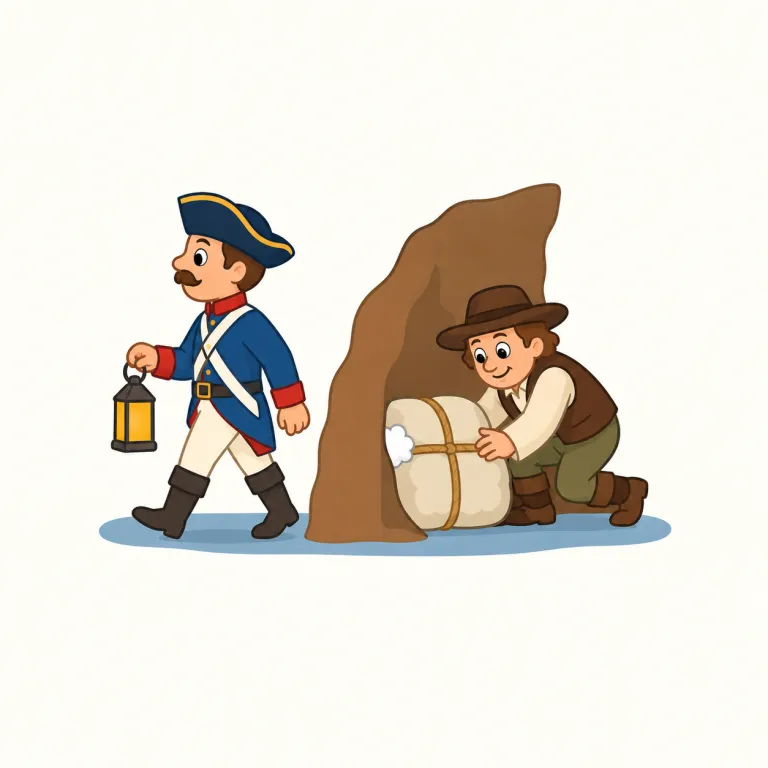
密輸業者
解説 Definition
歴史的に羊毛などの禁制品を密輸していた人。特にイングランドで関税を逃れるために違法に輸出した者を指す。
An owler is a smuggler, especially in older or historical use. The word is not common in modern everyday English and usually appears in history or law-related contexts.
覚え方のコツ Memory Tip
まず一般語の smuggler(密輸業者)を軸に置き、owler はその“歴史版・夜行性版”と覚えると残りやすい。owl が分かれば、夜に動く人物像が浮かぶので、昼間の正規商人ではなく、こっそり禁制品を運ぶ側だと結びつけやすい。-er は「〜する人」。意味は広い犯罪者全般ではなく、特にイングランドで羊毛などを違法輸出した人を指す限定的な語。smuggle と並べて見たときに、「より古風で、夜・密輸・羊毛」の3点セットが出れば定着しやすい。
The `-er` tells you it is a person. This is a special historical kind of `smuggler`, often linked with wool, coasts, and avoiding customs. Remember it as narrower than `smuggler`, not a general word for any criminal.
例文
The old trial records mention the owler leaving at dawn with wool bales.
古い裁判記録には、密輸業者が羊毛の梱を携えて夜明けに出発したことが記されていた。
Farmers feared that an owler would take their best fleece before taxes were paid.
農民たちは、税金を払う前に密輸業者が最上の羊毛を奪うことを恐れていた。
The coastal villagers watched for an owler who might hide the wool in caves.
沿岸の村人たちは、密輸業者が羊毛を洞窟に隠すかもしれないと見張っていた。
owler の類義語・関連語
owler の語源・成り立ち Etymology
owler は owl「フクロウ」に、行為者を表す接尾辞 -er が付いた語で、歴史的には夜に羊や羊毛をひそかに運び出す密輸人を指しました。語源的には「フクロウのように夜に動く人」という比喩なので、そこから「密輸業者」の意味になったと考えると納得しやすいです。関連語は owling、owl。
Owler is formed from owl and the suffix -er, which marks a person connected with an action or habit. Historically it referred to a smuggler who moved sheep or wool secretly at night, like an owl moving in the dark. The meaning grew from that night-owl image into the specific sense of an illegal trader. Related forms include owl and owling.
同じレベルの語彙をもっと
外部辞書で調べる
この英単語をクイズで覚えよう