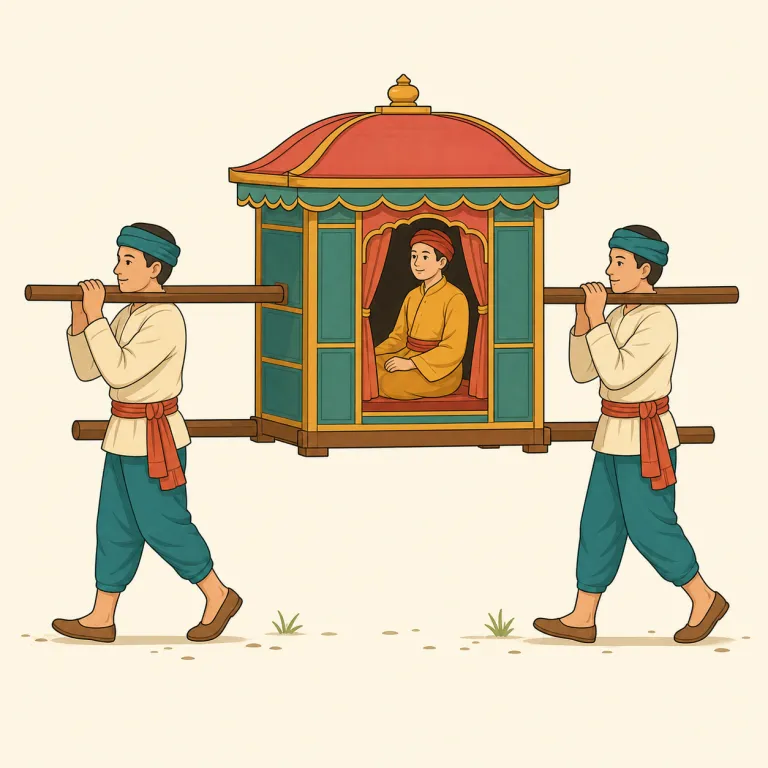
駕籠
解説 Definition
アジア各地で使用された移動用具。複数の労働者が棒で担ぐ屋根付きの乗り物で、主に富裕層の移動に用いられた。
A palanquin is a covered seat or small carriage that a person rides in while other people carry it on poles. It was used in the past, especially in Asia and some other regions, for travel or ceremonies. The word is mostly historical or cultural.
覚え方のコツ Memory Tip
歴史小説や植民地時代の旅行記で出る、「人が人を運ぶ乗り物」の専門語として覚える。wheel のある carriage や cart ではなく、複数の担ぎ手が棒で持ち上げて進む、屋根付きの“担ぎ式の乗り物”が palanquin。王侯・富裕層が ride in a palanquin する場面と結びつけると残りやすい。現代の日常語ではないので、「昔のアジアの移動手段」という歴史タグを付け、短い別形 palki を見ても同系だと連想できるようにしておくと混乱しにくい。
Remember `palanquin` as a history word, not an everyday transport word. It is not like a `carriage` or `cart` with wheels; people carry it with poles. Picture a rich or royal person riding in a covered seat carried by workers.
例文
In India, a palanquin was a common mode of transport for the wealthy.
インドでは駕籠は富裕層の一般的な移動手段であった。
The palanquin required four or more bearers to carry it through the streets.
駕籠は街中を運ぶために4人以上の担い手が必要だった。
Historical records describe elaborate palanquins decorated with silk and jewels.
歴史資料には、絹や宝石で飾られた豪華な駕籠について記されている。
palanquin の類義語・関連語
類義語
palanquin の語源・成り立ち Etymology
palanquin は Portuguese palanquim を経て、Odia pālaṅki、さらに Sanskrit palyaṅka「寝台・かご」にさかのぼる。もとは『体を横たえる台』なので、人を乗せて運ぶ駕籠の意味が自然に見える。palki も同じ語根。
English borrowed palanquin from Portuguese palanquim, which came from South Asian forms such as Odia pālaṅki and ultimately Sanskrit palyaṅka. That Sanskrit word meant a bed or couch, a place for lying down. From the idea of a carried bed, the meaning naturally shifted to a covered chair or litter for carrying a person. The shorter word palki comes from the same root.
同じレベルの語彙をもっと
外部辞書で調べる
この英単語をクイズで覚えよう