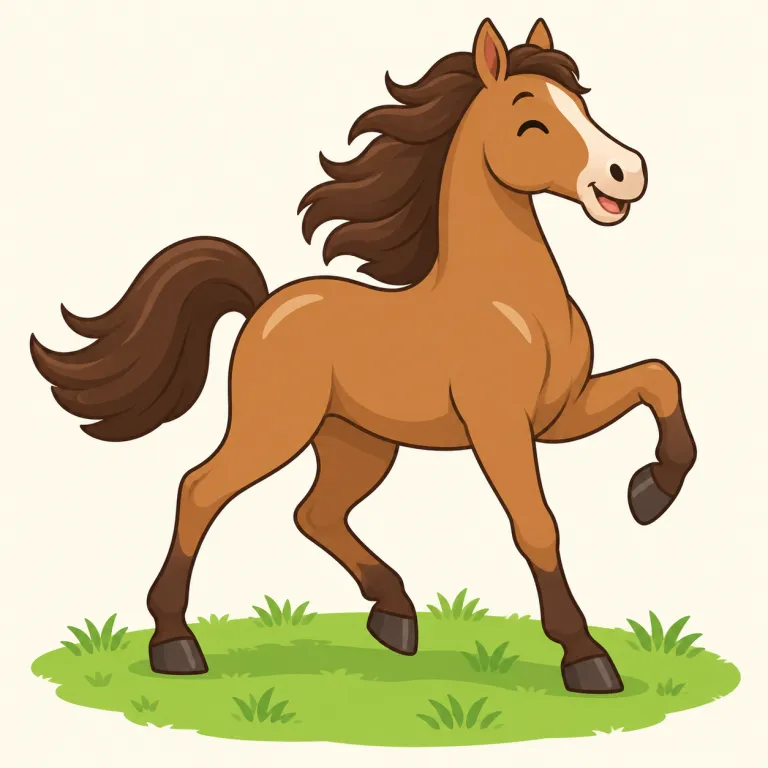
跳ねる
解説 Definition
prancing は prance(跳ね回る、得意げに歩く)の動名詞・現在分詞です。名詞としては、馬や人が軽やかに跳ねるように動くことを表します。
The action of moving with lively, springy, high-stepping movements, especially by a horse but also by a person. It often suggests playful, energetic, or proudly showy movement rather than an ordinary jump.
覚え方のコツ Memory Tip
原形 prance に -ing を付ける際、語末の黙字 e を落として prancing になります。名詞用法では horse's prancing のように「足を高く上げて軽快に跳ねる動き」。単なる jumping より、馬の足取りや舞台上の動きのような、誇らしげ・見せるような軽快さを含むと覚えます。
Prancing is formed from prance by dropping the final silent e and adding -ing. As a noun, it names the lively movement itself, as in “the horse’s prancing.” Picture a horse lifting its feet high in a show ring, or a dancer crossing a stage with playful, springy steps. This is more specific than ordinary jumping: prancing often looks energetic, proud, or deliberately showy. The possessive pattern “the pony’s prancing” helps identify the noun use, while “the pony is prancing” uses the same form as a present participle.
例文
The horse's prancing delighted the children at the show.
ショーで馬が跳ねる様子に子どもたちは喜びました。
Her prancing across the stage made the dance feel playful.
彼女が舞台を跳ねるように動いたので、その踊りは楽しげに見えました。
The trainer watched the pony's prancing and adjusted its pace.
調教師はポニーが跳ねる動きを見て、歩調を調整しました。
prancing の類義語・関連語
prancing の語源・成り立ち Etymology
prancing は prance+-ing で、-ing は動作を名詞化する接尾辞です。prance は中英語に見られ、低地ドイツ語・オランダ語系の「誇らしげに跳ねる」語群と関係づけられます。だからただ跳ねるのでなく、「見せるように足を高く上げる」感じで、関連語は prance, prancer。
Prancing is the -ing form of prance, with the final silent e removed before the suffix is added. Prance has been used in English since the Middle English period for lively or showy movement, especially the high-stepping movement of a horse. Its more distant origin is uncertain, though it has been compared with related-looking words in Low German and Dutch dialects. The noun use of prancing developed naturally from the verb to name the action itself.
同じレベルの語彙をもっと
外部辞書で調べる
この英単語をクイズで覚えよう