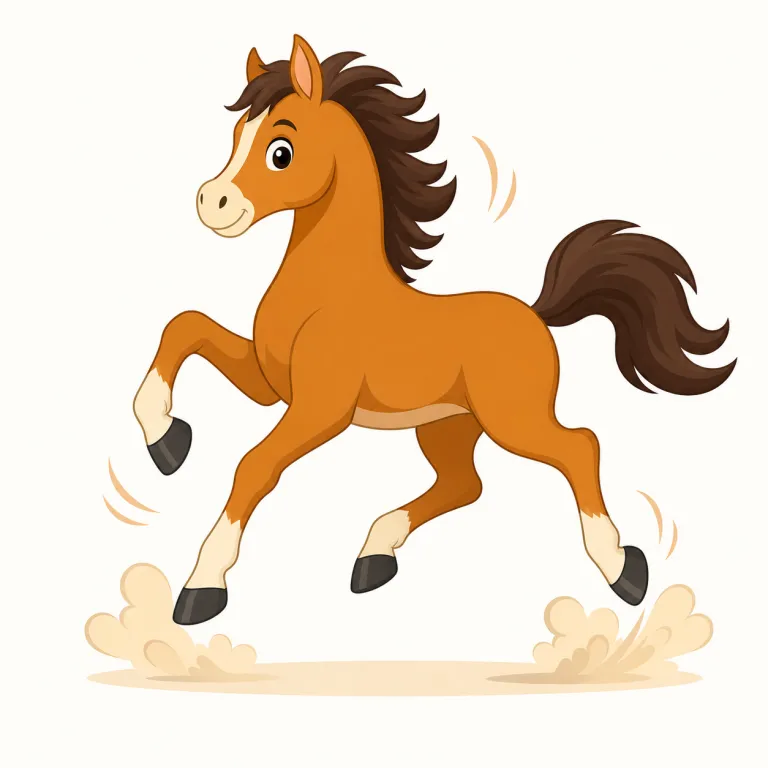
prance
prance はTOEIC 860・TOEFL 80・IELTS 6.5レベルの英単語で、「飛び跳ねる」という意味があります。発音記号は /præns/ です。
飛び跳ねる
解説 Definition
馬が前脚を高く上げて元気よく歩くこと。人が得意げに軽やかに歩くさま。
To prance means to move with lively, high steps in a proud, excited, or playful way. It is often used for horses, but it can also describe people who walk in a showy or energetic manner. The word sometimes suggests a dramatic or attention-seeking style.
覚え方のコツ Memory Tip
まず horse が主語の絵で覚えると定着しやすい語です。単なる walk ではなく、前脚を高く上げてリズムよく見せるように進む感じ。人に使うと「うれしくて弾む」よりも、strut に近い「得意げに、見せびらかすように歩く」ニュアンスが出ます。prance around で“そのへんを誇らしげに跳ね歩く”。dance のような軽快さはあるが、踊ること自体ではない点、jump や skip のような単発の跳ねではなく、連続した足取りを表す点を区別すると覚えやすいです。
Remember it with a horse lifting its legs high and moving in a showy way. `Prance` is not just walking or jumping, but moving with proud, lively steps. For people, it often suggests showing off a little.
例文
The horse began to prance excitedly as the parade music started.
パレードの音楽が始まると、馬は興奮して脚を高く上げながら歩き始めた。
The children pranced around the garden in their Halloween costumes.
子どもたちはハロウィンの衣装を着て庭を飛び跳ねて回った。
She pranced onto the stage with the confidence of a seasoned performer.
彼女はベテランのパフォーマーのような自信を漂わせ、得意げにステージへ出ていった。
prance の類義語・関連語
prance の語源・成り立ち Etymology
pranceは中英語prauncenを経て、古フランス語prancer「馬が跳ねる・得意げに歩く」に由来するとされます。prankやオランダ語pronkenと結びつける説もあり、目立つように弾んで動く感覚から、人にも「誇らしげに跳ね歩く」の意味が生まれました。
Prance comes from Middle English prauncen, probably from Old French prancer, meaning "to spring" or "to move proudly like a horse." The word kept the sense of lively, showy movement. Over time, it was used not only for horses but also for people moving in an exaggerated or proud way.
同じレベルの語彙をもっと
TOEIC 860の一覧へ →外部辞書で調べる
この英単語をクイズで覚えよう