磁化強度
noun 名詞物理学で、物質の単位体積当たりの磁気モーメントを表すベクトル量を指します。磁化する過程そのものではなく、物質がどの向きにどれほど磁化しているかを数量的に示す概念です。
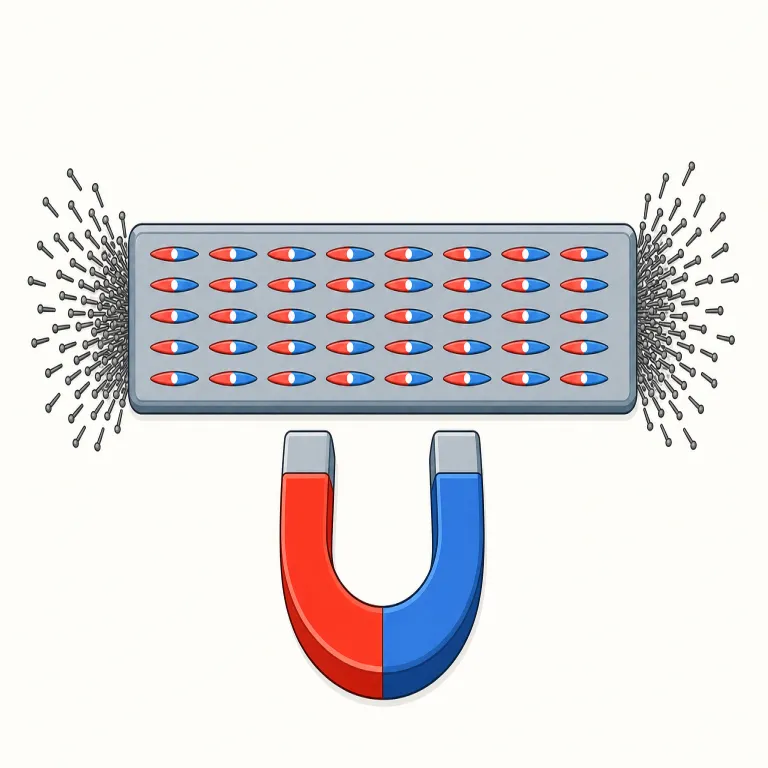
magnetization はTOEFL 80・IELTS 6.5レベルの英単語で、「磁化」という意味があります。発音記号は /ˌmæɡnətəˈzeɪʃən/ です。
物質が磁気を帯びること、または磁気を帯びさせる過程。物理学における磁性の基本概念。
Magnetization is the process or state of becoming magnetic. In physics, it describes how strongly a material is affected by a magnetic field or how much magnetic force it has.
まず magnet「磁石」、magnetic「磁気のある」、magnetize「磁気を帯びさせる」を一直線でつなげると覚えやすいです。そこに -ation が付くと「〜すること・その結果」という名詞になるので、magnetization は「磁石の性質を持つようになること=磁化」と組み立てて取れます。magnetism が「磁気・磁性」という一般的な性質名なのに対し、magnetization は『物質が実際にどれだけ磁化しているか』『磁化していく過程』を言う語。measure magnetization, increase magnetization のように、変化や測定の文脈で出ると結びつけると定着しやすいです。
Connect the chain `magnet`, `magnetic`, `magnetize`, `magnetization`. The ending `-ation` often turns an action or process into a noun, so this word is the process or result of becoming magnetic. It often appears with verbs like `measure` or `increase`.
The magnetization of the iron bar was achieved by placing it in a strong magnetic field.
鉄棒は強い磁場の中に置くことで磁化された。
The scientists increased the sample's magnetization until it could attract iron filings.
科学者たちは、試料が鉄粉を引きつけるまで磁化を強めた。
The process of magnetization causes the atoms in a material to align their magnetic moments.
磁化の過程は物質中の原子の磁気モーメントを整列させる。
文脈によって、次の意味でも使われます。
物理学で、物質の単位体積当たりの磁気モーメントを表すベクトル量を指します。磁化する過程そのものではなく、物質がどの向きにどれほど磁化しているかを数量的に示す概念です。
magnetization は magnetize + -ation で「磁石にすること・磁化」を表し、語の中心 magnet はラテン語 magnes、さらにギリシャ語 magnētis lithos「マグネシアの石」にさかのぼります。土地の名から「人を引きつける石」が生まれたので、magnet や magnetic も同根です。
"Magnetization" comes from "magnetize" plus the noun ending "-ation." Its core word, "magnet," goes back through Latin "magnes" to Greek "magnētis lithos," meaning "stone from Magnesia." A place name became the name of a stone with attractive power, which later gave English related words like "magnetic" and "magnetism."
この英単語をクイズで覚えよう