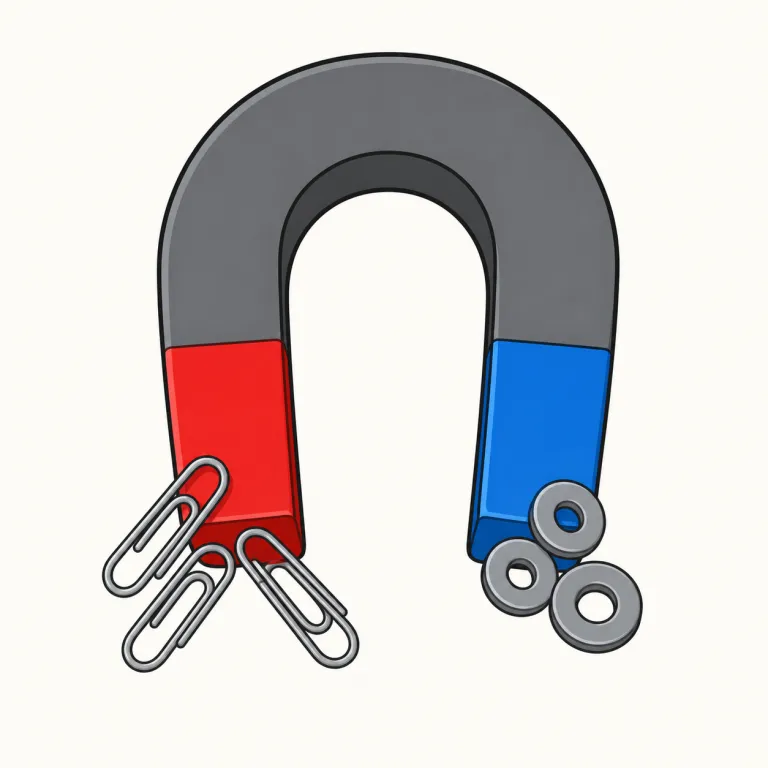
magnet
magnet はTOEFL 80・IELTS 6.5・英検6級レベルの英単語で、「磁石」という意味があります。発音記号は /ˈmæɡnət/ です。
磁石
解説 Definition
磁石は鉄などの磁性をもつ物質を引きつけたり、ほかの磁石と引き合ったり反発したりする性質をもつ物体です。北極と南極と呼ばれる二つの極をもち、同じ極どうしでは反発し、異なる極どうしでは引き合います。日常や科学の中で磁石の性質を応用してさまざまな装置が作られています。
A magnet is an object that can attract iron and some other metals. It is used in science, machines, and everyday items such as doors or tools. The word can also describe someone or something that strongly attracts people or attention.
覚え方のコツ Memory Tip
magnet は magnetic(磁気のある), magnetism(磁力)と同じ核をもつ基本語で、この語群の中心だと押さえると覚えやすいです。動詞 attract「引きつける」と一緒に、a magnet attracts metal の形で覚えると定着します。比喩でも使われ、a magnet for attention / trouble なら「人や物をぐっと引き寄せる存在」。同じ“引きつける”でも charm は魅力で惹く、magnet は物理的・比喩的に強く吸い寄せる感じです。
Use the word family: `magnet`, `magnetic`, `magnetism`. They all share the same core idea, so learning them together makes each one easier to remember. You can also link it with `attract`: a magnet attracts things, both in science and in expressions like `a magnet for trouble`.
例文
This magnet holds my note.
私のメモはこの磁石で留めてあります。
A magnet sticks to the fridge.
磁石が冷蔵庫にくっつきます。
The magnet pulls a pin.
その磁石がピンを引き寄せます。
magnet の類義語・関連語
magnet の語源・成り立ち Etymology
magnet はギリシャ語 magnētis lithos「マグネシア産の石」に由来し、接辞より地名 Magnesia が語源の核です。magnetic や magnetism も同根で、まず石の名だったものが「引きつける力」一般を表すようになった流れが見えます。
Magnet comes from Greek `magnētis lithos`, meaning "Magnesian stone," named after Magnesia, a place linked with this mineral. It first referred to the natural stone, then the name widened to anything with the same pulling force. Related English words include `magnetic` and `magnetism`.
同じレベルの英単語をもっと
TOEFL 80の一覧へ →外部辞書で調べる
この単語を英単語クイズで覚えよう