人を引きつけるもの、魅力の中心
noun 名詞人や関心を強く引きつける人物・場所・物を比喩的に指す。しばしば a lodestone for ... の形で使われ、単なる人気以上の、周囲を引き寄せる強い魅力や影響力を表す。
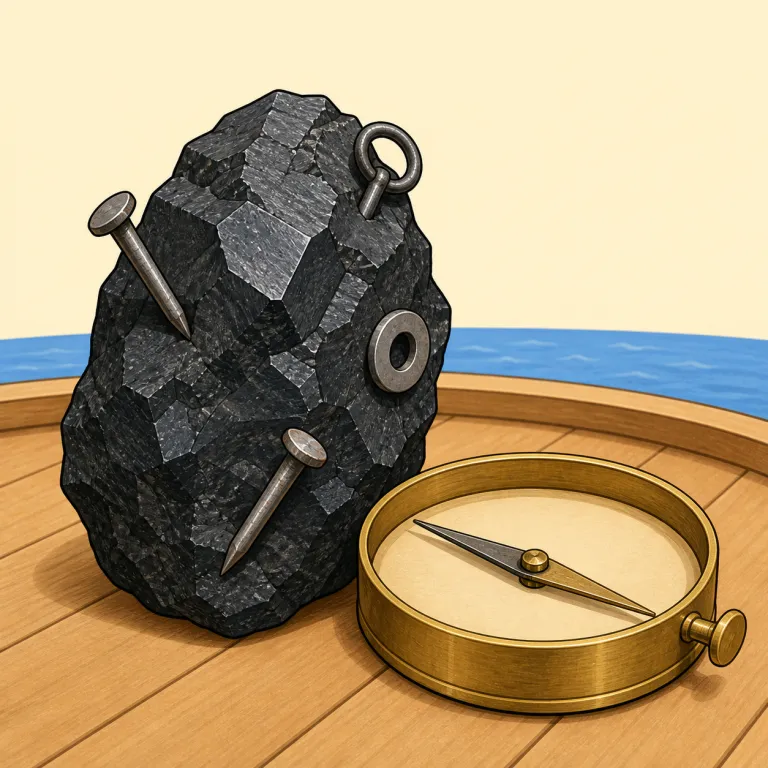
自然に磁化された鉱物。古くから航海用の羅盤として利用されてきた。
A lodestone is a naturally magnetic piece of mineral that can attract iron. It is the old natural form of a magnet. The word can also be used figuratively for something that strongly attracts people or attention.
`stone` が入るので、まず「ただの鉱物ではなく“特別な石”」と固定します。覚える核は `magnet` よりも「磁力で方角を示す石」という場面です。`compass`、航海、北を指す針と一緒に結び付けると残りやすいです。普通の `magnet` は日常的な磁石、`lodestone` は古風で物質名寄りの語。`milestone` など他の `-stone` 語と違い、目印ではなく“針を動かし進路を定める石”だと押さえると混同しにくく、比喩的に「人を引きつける中心」の感覚にもつなげられます。
The `stone` part helps you picture a special stone, not a modern plastic magnet. A good memory image is an old compass needle being pulled by a magnetic stone and helping travelers find direction. `Magnet` is the everyday word; `lodestone` feels older and more natural or historical.
The lodestone attracted metal objects.
磁石鉱石は金属を引き付けた。
Ancient sailors used lodestone for navigation.
古代の船乗りたちは磁石鉱石を航海に利用した。
The lodestone's magnetic properties were well-known.
磁石鉱石が磁力を持つことはよく知られていた。
文脈によって、次の意味でも使われます。
人や関心を強く引きつける人物・場所・物を比喩的に指す。しばしば a lodestone for ... の形で使われ、単なる人気以上の、周囲を引き寄せる強い魅力や影響力を表す。
lodestone は古英語 lād「道・導き」と stone「石」から成る語です。磁針の向きを導く石だったため、これは単なる鉱石名ではなく「進路を示す石」という原義を持ちます。関連語には lead と lodestar があります。
Lodestone comes from Old English lad, meaning "way," "journey," or "guidance," plus stone. It originally meant a stone that shows the way, because its magnetic power could guide direction. The same old root is related to English lead, and it also appears in lodestar.
この英単語をクイズで覚えよう