
意味一覧 (2件)
威張って歩く
/ noun 名詞 気取り歩き
解説 Definition
胸を張って、自信や優越感を見せつけるように歩くことを表す。人が得意げに登場したり、勝ったあとに周囲の視線を意識して歩いたりする場面でよく使われ、少し皮肉やからかいを含むことが多い。舞台やランウェイにも合う語。
This verb means to walk with the chest raised and an exaggerated display of confidence or superiority. It often sounds slightly mocking, although it can also describe a stylish, confident walk on a stage or runway.
覚え方のコツ Memory Tip
strut は、胸を突き出し、周囲の視線を意識しながら大股で歩く姿を一枚の映像にすると覚えやすい動詞です。walk が中立的な「歩く」なのに対し、strut は自信や優越感を見せつける歩き方で、日常では「得意げだ」と少しからかう響きがあります。一方、舞台やランウェイなら華やかな自信も表せます。strut into the office「威張った様子で職場に入る」、strut around the ring、strut down the runway の方向表現ごと覚えると使いやすいです。
Picture someone pushing out their chest and taking large steps while making sure everyone is watching. Unlike the neutral verb walk, this word highlights a showy display of pride or confidence.
例文
He strutted into the office after getting the promotion.
昇進した彼は得意げにオフィスへ入ってきた。
The champion strutted around the ring after the fight.
王者は試合のあとリングの周りを威張って歩いた。
She strutted down the runway in a silver dress.
彼女は銀色のドレスでランウェイを気取って歩いた。
支柱
(意味 2)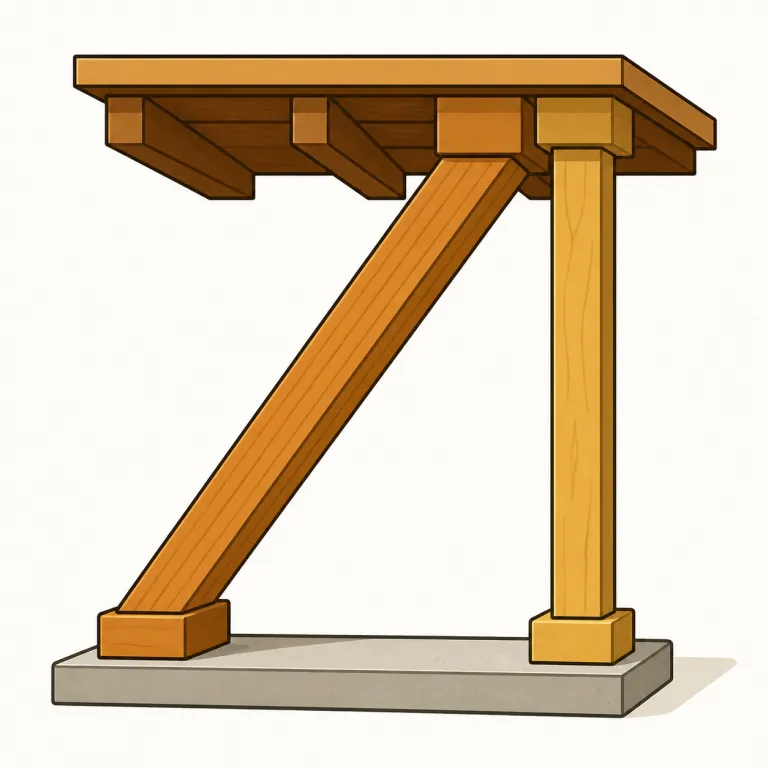
解説 Definition
建築物や機械を支えるための支柱、または突っ張り材のことです。構造物の荷重や圧力を受けて支える、強固な部材を指します。
A strut is a strong bar or support used to hold part of a structure or machine in position. It helps carry weight or keep something stable. This word is common in engineering, construction, and vehicle parts.
覚え方のコツ Memory Tip
strut は「ぴんと突っ張って支える部材」と捉えると覚えやすい。support と一緒に見て、support strut で「支える支柱」。建築では roof strut、機械では landing strut など、重さや圧力を受ける場所で出やすい。rod や pole がただの棒・柱なのに対し、strut は「骨組みの一部として荷重を受ける」感じが強い。動詞 strut の「胸を張って歩く」も、体がぴんと張る感覚で結びつけると忘れにくい。
A `strut` is not just any pole or bar; think of a part that holds weight in a frame. That is why it appears in technical pairs like `support strut` or `landing strut`. If it helps, link it to the verb `strut`, where the body is held stiff and straight.
例文
The bridge's steel struts were designed to withstand heavy loads.
その橋の鋼製の支柱は大きな荷重に耐えるように設計されていました。
The roof was supported by wooden struts.
その屋根は木製の支柱で支えられていました。
Engineers reinforced the building with additional struts for safety.
エンジニアは安全のために追加の支柱で建物を補強しました。
strut の類義語・関連語
類義語
紛らわしい語
strut の語源・成り立ち Etymology
strut はゲルマン系の古英語 strutian「突き出る・こわばる」にさかのぼるとされます。「体を硬く突き出す」感覚から、胸を張って得意げに歩く意味が生まれ、そこから名詞「支柱」の意味ともつながります。関連語に stiff、stark。
The word is traced to Old English strutian, meaning “to stick out” or “be rigid.” The image of holding the body stiffly forward developed into the sense of walking in a proud, showy manner.
同じレベルの語彙をもっと
外部辞書で調べる
この英単語をクイズで覚えよう