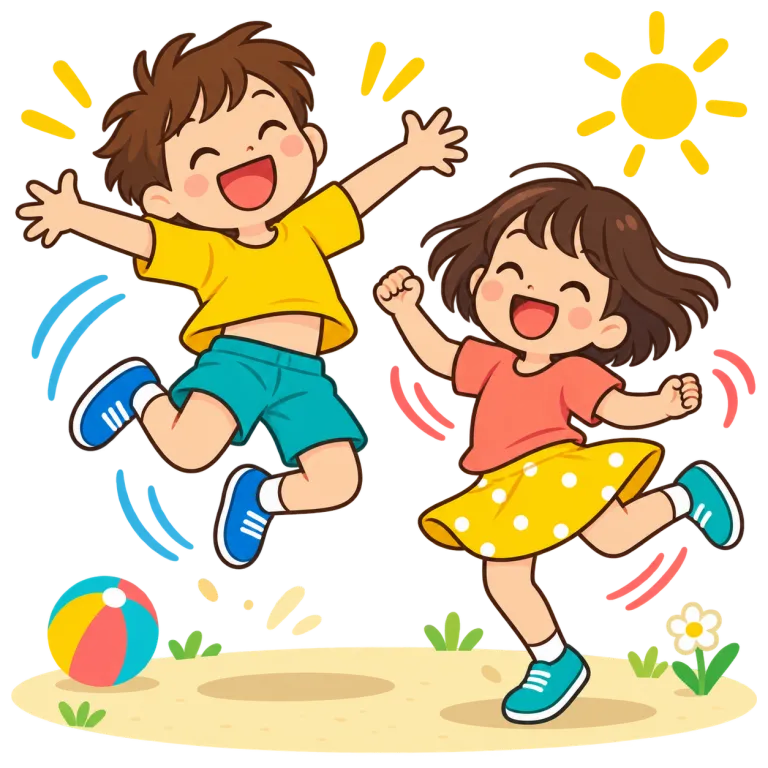
いちゃつく・浮かれ遊ぶ
verb 動詞くだけた報道表現などで、誰かと遊び歩いたり、性的・恋愛的な関係を楽しんだりすることを指します。通例cavort with someoneの形で使われ、しばしば非難や皮肉を帯びます。
楽しげに飛び跳ねたり、踊ったりすることを意味する動詞で、陽気で無邪気な動作を表す。喜びや興奮を表現する際に使用される。
Cavorting means moving around in a lively, playful, and often excited way. It is used for people or animals that are dancing, jumping, or having energetic fun. The word can sound slightly humorous or informal.
cavorting は、静かに喜ぶのでなく、うれしさが体にあふれて飛び回る場面で覚えると残りやすい語です。犬や子ども、イルカが芝生や浜辺、水辺で元気に動き回る絵を結びつけると定着しやすい。dance より型がなく、frolic に近いが、もっと人目を引く陽気さがある感じ。よく “children cavorting on the beach” “dolphins cavorting in the water” のように出るので、楽しくはしゃぐ生きた動作ごと覚えるのがコツです。
Picture happy, energetic movement, not quiet joy. This word fits scenes like children on the beach or dolphins in the water, moving around in a lively way. It is close to `frolic`, and feels looser and more playful than `dance`.
Children were cavorting in the playground.
子どもたちが遊び場ではしゃぎ回っていた。
The dolphins were cavorting in the waves.
イルカが波の中で楽しそうに跳ねていた。
The couple were cavorting on the beach.
そのカップルはビーチではしゃいでいた。
文脈によって、次の意味でも使われます。
くだけた報道表現などで、誰かと遊び歩いたり、性的・恋愛的な関係を楽しんだりすることを指します。通例cavort with someoneの形で使われ、しばしば非難や皮肉を帯びます。
cavorting は cavort に -ing が付いた形。cavort は18世紀の米語で、語源は不確かだが、フランス語系 curvet「馬の跳ね上がり」や vault「跳ぶ」と結びつけて説明される。馬が軽快に跳ねる像から、人がはしゃいで動き回る意味になった。関連語は curvet、vault。
Cavorting is the -ing form of cavort. Cavort appeared in American English in the 18th century, but its exact origin is uncertain; it is often connected with French curvet or vaulting words about leaping. The image is of a lively jump or prancing movement, especially like a horse, which later became playful human movement. Related words sometimes mentioned are curvet and vault.
この英単語をクイズで覚えよう