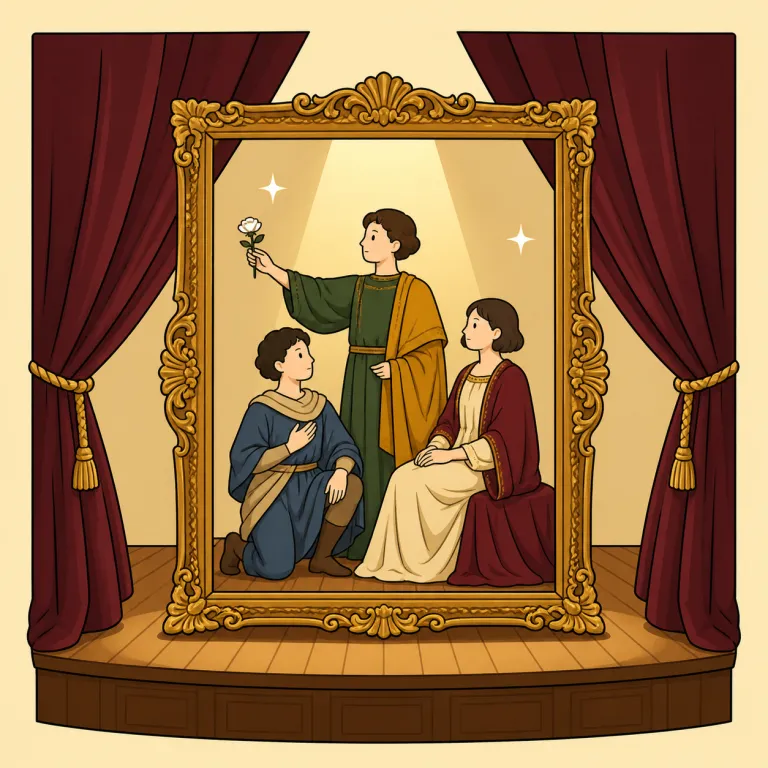
印象的な光景、絵のような場面
noun 名詞人や物が一つの絵のように見える、印象的で静的な光景や配置を指します。演者が意図的に静止する活人画に限らず、実際に目の前に広がる場面を描写的にまとめていう場合にも使われます。
活人画とは、俳優や人々が静止した状態で、まるで絵画のような場面を作成する芸術表現です。劇的な場面や歴史的な瞬間を再現します。
A tableau is a carefully arranged scene that looks like a picture. It is often used in theater, art, or photography, especially when the people in the scene remain still. The word can also describe any vivid and memorable visual scene.
tableau は「動きのある劇」ではなく、「人物が配置されて一瞬が止まった、絵のような場面」とまとめて覚えると残りやすいです。scene が出来事全体、picture が絵そのものなら、tableau はその中間で、見る人に“構図として印象づける静止場面”という感じ。舞台なら final tableau, dramatic tableau のように、終幕や見せ場の静止した演出的瞬間で出やすい語です。単なる table ではなく、人や物が並んで一枚絵になる名詞だと意識すると、意味がぶれません。
Think of a scene that looks like a painting. In a `tableau`, people hold still in a carefully arranged pose instead of moving normally. Remember it as a frozen stage picture, often in theater, church events, or historical shows.
The theater troupe performed a stunning tableau of historical events.
その劇団は歴史的出来事の素晴らしい活人画を演じた。
The Christmas tableau in the town square attracted thousands of visitors.
町広場のクリスマス活人画は数千人の訪問者を引き付けた。
Each tableau depicted a different scene from the classic novel.
それぞれの活人画は、その古典小説の別々の場面を描いていた。
文脈によって、次の意味でも使われます。
人や物が一つの絵のように見える、印象的で静的な光景や配置を指します。演者が意図的に静止する活人画に限らず、実際に目の前に広がる場面を描写的にまとめていう場合にも使われます。
tableau はフランス語で、さらにラテン語 tabula「板・書き板」にさかのぼります。絵を板に描いた感覚から「一場面を絵のように見せる活人画」の意味になり、同語源に table, tablet があるので「平らな板」のイメージで覚えられます。
Tableau comes from French and goes back to Latin tabula, meaning "board" or "plank." It originally referred to a picture shown on a flat surface, like a painted panel. From there, it developed into the idea of a scene presented like a picture; table and tablet are from the same root.
この英単語をクイズで覚えよう