もうすぐ~に達する
preposition 前置詞年齢・時刻・数量などの前に置き、「その値に近づいている」という意味を表すくだけた用法です。pushing forty や pushing midnight のように使い、通常はまだその値に達していないことを示します。
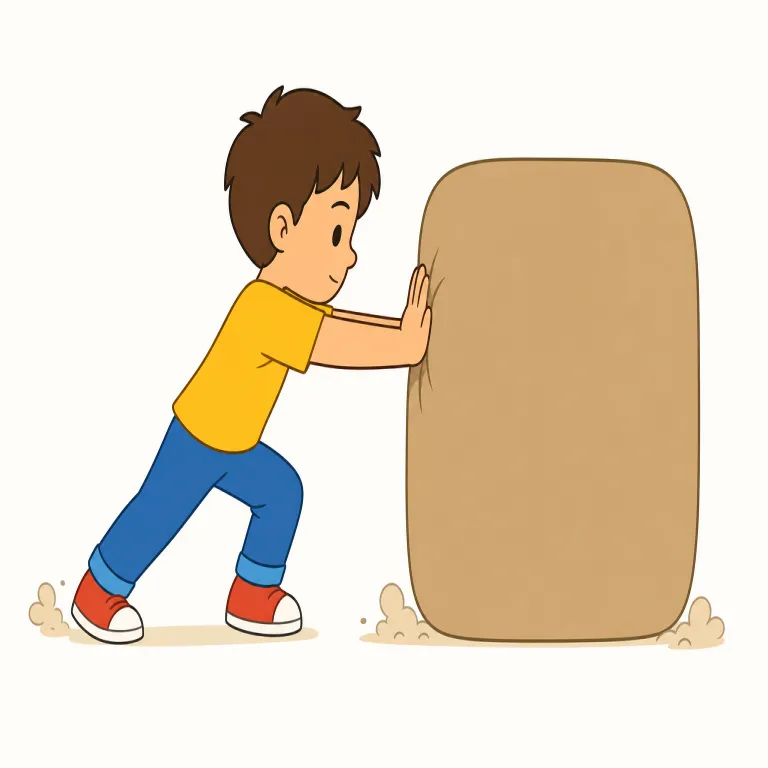
「pushing」は名詞として、物や人に力を加えて前へ動かそうとすること、または押し続ける行為を表します。物理的に押す場面だけでなく、人混みでの押し合いや、ドアやボタンなどを押す動作一般について述べるときにも用いられます。
Pushing is the action of using force to move something away from you or in a certain direction. It is commonly used for physical movement, such as pushing a door, a cart, or a button. In some contexts, it can also suggest trying strongly to make something happen.
まず基礎の動詞 push「押す」を固め、その後ろに -ing が付くと「押している動き」「押すこと」という行為名詞になると捉えると覚えやすいです。名詞の push が一回の「ひと押し」に寄りやすいのに対し、pushing は押し続ける動作や圧力、人混みでの押し合いの感じが出やすい語です。no pushing(押さないで), pushing and shoving(押し合いへし合い)の形で場面ごと覚えると定着します。
Build it from the basic verb `push`. When `-ing` is added, it often turns the action into a continuing movement, so `pushing` feels like ongoing pressure, not just one quick push. Think of signs like `No pushing` or the phrase `pushing and shoving`.
Pushing the door is easy.
ドアを押すことは簡単です。
Pushing this box moves it forward.
この箱を押すと、箱が前に動きます。
Pushing the cart is fun.
カートを押すことは楽しいです。
文脈によって、次の意味でも使われます。
年齢・時刻・数量などの前に置き、「その値に近づいている」という意味を表すくだけた用法です。pushing forty や pushing midnight のように使い、通常はまだその値に達していないことを示します。
古英語 pūscian(押す、突く)が起源で、さらに古フランス語 pousser、ラテン語 pulsare(打つ、叩く)に遡る。pulse(脈拍)や propulsion(推進)も同語根。力を加えて動かすという核心イメージが全用法に通じる。
Pushing comes from the verb push, which is linked to Old English and Old French forms meaning "to thrust" or "to press." It can be traced further back to Latin pulsare, meaning "to beat" or "to strike." Related words such as pulse and propulsion keep the same basic idea of force causing movement.
この英単語をクイズで覚えよう