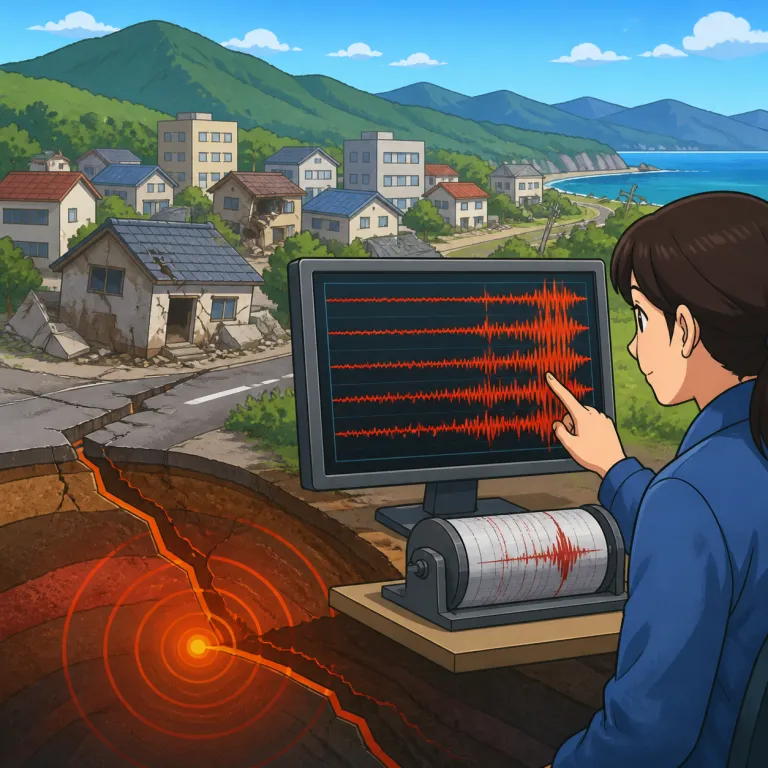
地震活動
解説 Definition
地震活動、地震の発生頻度や強度。特定の地域における地震の活発性。
Seismicity is the level or pattern of earthquake activity in a particular area. It is used in geology and earth science when talking about how often earthquakes happen and how they are spread. The word is mainly technical.
覚え方のコツ Memory Tip
seismic を知っていれば、seismicity は「地震に関する性質・度合い」をまとめた名詞だと捉えやすい。-ity は activity, density, stability のように「状態・程度」を作る語尾。つまり earthquake が個々の地震そのもの、seismicity はある地域で地震がどれくらい頻繁・活発に起こるかという“全体傾向”。high seismicity / low seismicity の形で覚えると使いやすい。magnitude や intensity が1回の地震の強さ寄りなのに対し、こちらは地域全体の地震活動を指す。
If you know `seismic`, you already know the core of `seismicity`. The suffix `-ity` often means a state or condition, as in `activity` or `stability`. So `seismicity` is the overall level or pattern of earthquake activity in a place.
例文
The seismicity in this region has increased significantly over the past year.
この地域の地震活動は過去1年間で大幅に増加している。
Scientists monitor seismicity to predict potential earthquakes.
科学者は起こり得る地震を予測するために地震活動を監視している。
The high seismicity of the Pacific Ring of Fire makes it a focus of research.
環太平洋火山帯は地震活動が活発なため、研究の焦点となっている。
seismicity の類義語・関連語
seismicity の語源・成り立ち Etymology
seismicity はギリシャ語 seismos「地震」に、形容詞語尾 -ic と名詞語尾 -ity が重なった語です。seismograph や seismic と同根で、「揺れるもの」という核から、ある地域の地震の起こりやすさや地震活動全体を表す語になりました。
Seismicity is built from seismic, from Greek seismos meaning "earthquake," plus the noun ending -ity. It belongs to the same family as seism and seismograph. The core idea is shaking or quaking, and the word came to mean the overall level or pattern of earthquake activity in a place.
同じレベルの語彙をもっと
外部辞書で調べる
この英単語をクイズで覚えよう