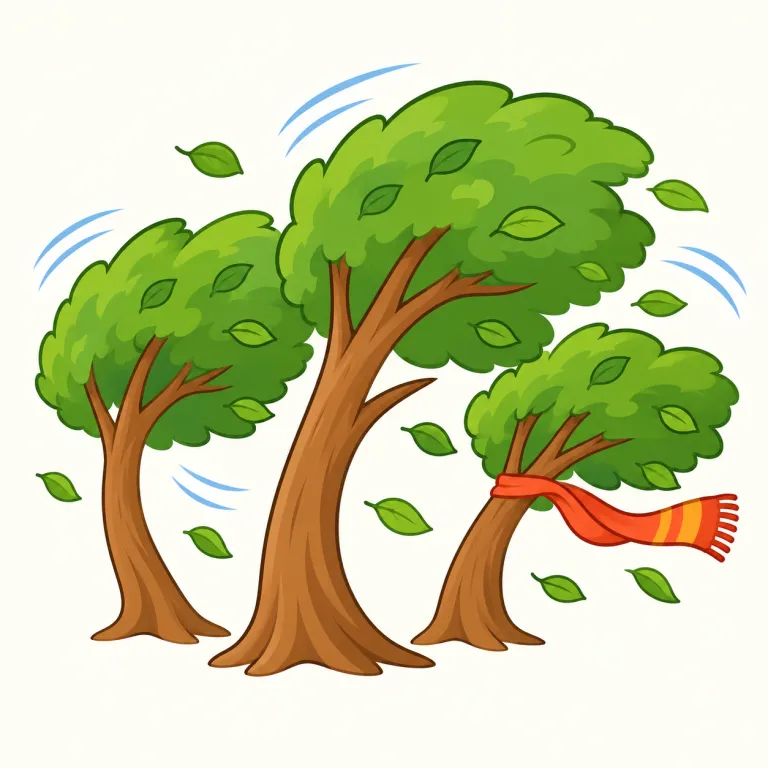
揺れる
解説 Definition
swaying は、体や物が左右や前後に「揺れている」ことを表す動詞の現在分詞です。風で木が揺れる、音楽に合わせて体が揺れるなど、ゆっくりした動きによく使われます。
The present participle or gerund of sway, meaning moving slowly or gently from side to side or backward and forward. It is often used for trees in wind, bodies moving to music, and boats moving on water.
覚え方のコツ Memory Tip
原形 sway「ゆっくり揺れる」に -ing を付けた形で、y はそのまま残して swaying と綴る。発音は「スウェイイング」に近い。trees swaying in the wind、body swaying to music、boat swaying on water を一つの映像にし、震える shake よりも、左右・前後へ比較的ゆったり動く感覚を覚える。
Add -ing to sway without changing the final y: sway becomes swaying. Imagine three slow, repeated movements in one scene: trees swaying in the wind, a person swaying to music, and a boat swaying on the water. These images share a gentle movement from side to side or back and forth. Compare swaying with shaking: shaking is often quicker, sharper, or more irregular, while swaying usually suggests a broader and smoother motion. The phrase “swaying gently” is especially useful because gently reinforces the characteristic pace and shape of the movement.
例文
The trees were swaying in the strong wind.
木々は強い風の中で揺れていました。
She was swaying gently to the music.
彼女は音楽に合わせてやさしく体を揺らしていました。
The boat kept swaying on the dark water.
その船は暗い水面で揺れ続けていました。
swaying の類義語・関連語
swaying の語源・成り立ち Etymology
swaying は sway + -ing。sway は中英語を経て古ノルド語 sveigja「曲げる・傾ける」に連なる語で、原義は「まっすぐなものをしならせる」です。だから swaying は単なる移動でなく、力を受けて左右にゆらぐ感じになります。関連語は sway, unswayed。
Swaying is formed from sway plus -ing. Sway came into Middle English from a Scandinavian source and is related to Old Norse sveigja, “to bend” or “make incline.” The early physical idea involved bending or moving something away from a straight position. This developed into the familiar sense of moving repeatedly from side to side, as well as the separate figurative sense of influencing someone’s judgment.
同じレベルの語彙をもっと
外部辞書で調べる
この英単語をクイズで覚えよう