雄穂
noun 名詞トウモロコシなどの茎の頂部にできる、房状の雄花の集まりを指します。花粉を放出する部分であり、実になる雌花から伸びる絹糸状の部分とは区別されます。
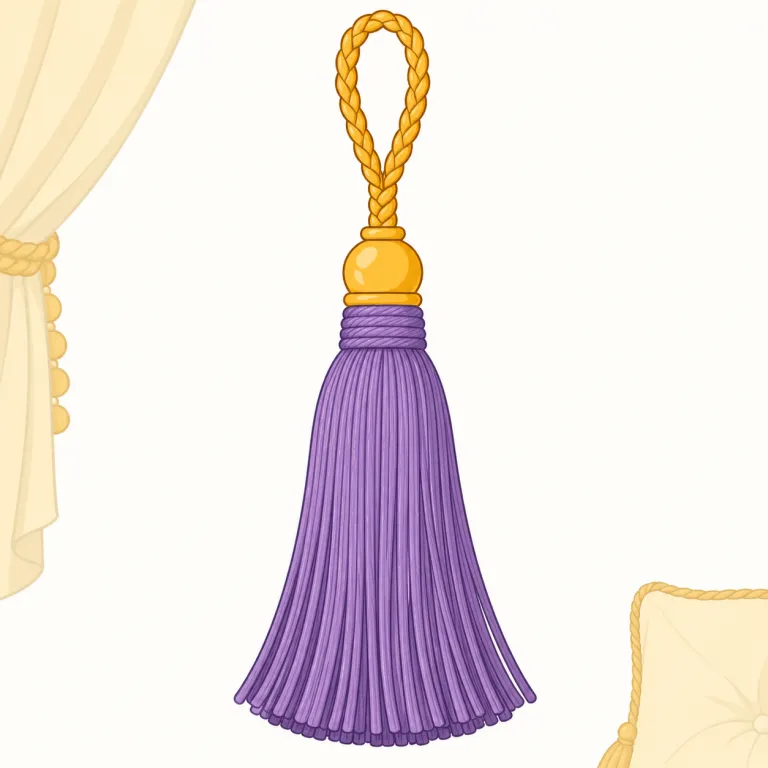
糸やひもを束ねて先を垂らした装飾用の房のこと。帽子やカーテン、クッション、衣服、しおりなどに付けられ、見た目を華やかにしたり、端を飾ったり、目印として使われたりする小さな飾りを指す。
A tassel is a group of hanging threads tied together at one end and used as a decoration. It is often seen on clothing, curtains, graduation caps, or furniture. The word usually refers to something soft and ornamental rather than practical.
tassel は、curtain tassel や graduation cap tassel で覚えると残りやすい語です。どちらも「端についた、束ねた糸が下に垂れる飾り」。まず tail のようにぶら下がる形を思い浮かべると、意味が絵で固定されます。重要なのは、ただのひもではなく装飾用の房だという点。fringe が布の端にずらっと並ぶふさ飾りなのに対し、tassel は一本ずつ付く房の感じが強め。つづりは tussle(もみ合い)と混同しないよう注意。
Picture a bunch of threads hanging down from one point, like on a graduation cap or a curtain. That image is the best memory hook for `tassel`. It also helps to contrast it with `fringe`, which usually runs along an edge, while a tassel hangs like one separate ornament.
The graduation cap was decorated with a gold tassel.
卒業帽には金色の房飾りが付いていた。
The elegant curtains had tassels hanging from the bottom edge.
上品なカーテンの裾には房飾りが垂れ下がっていた。
She used a decorative tassel as a bookmark.
彼女は装飾用の房飾りをしおり代わりに使った。
文脈によって、次の意味でも使われます。
トウモロコシなどの茎の頂部にできる、房状の雄花の集まりを指します。花粉を放出する部分であり、実になる雌花から伸びる絹糸状の部分とは区別されます。
tassel は中英語・古フランス語 tassel に由来し、もともと「小さな房飾り・結び飾り」を表した語です。明確な接頭辞分解はありませんが、tasselled や tasseled も同系で、糸を束ねて垂らした見た目そのものが『タッセル』の意味になったと考えると腑に落ちます。
Tassel came into English from Middle English and Old French tassel. It originally referred to a small bunch or hanging tuft used as an ornament. The meaning stayed close to its physical shape, a cluster of threads tied together and hanging down. Related forms include tasseled and tasselled.
この英単語をクイズで覚えよう