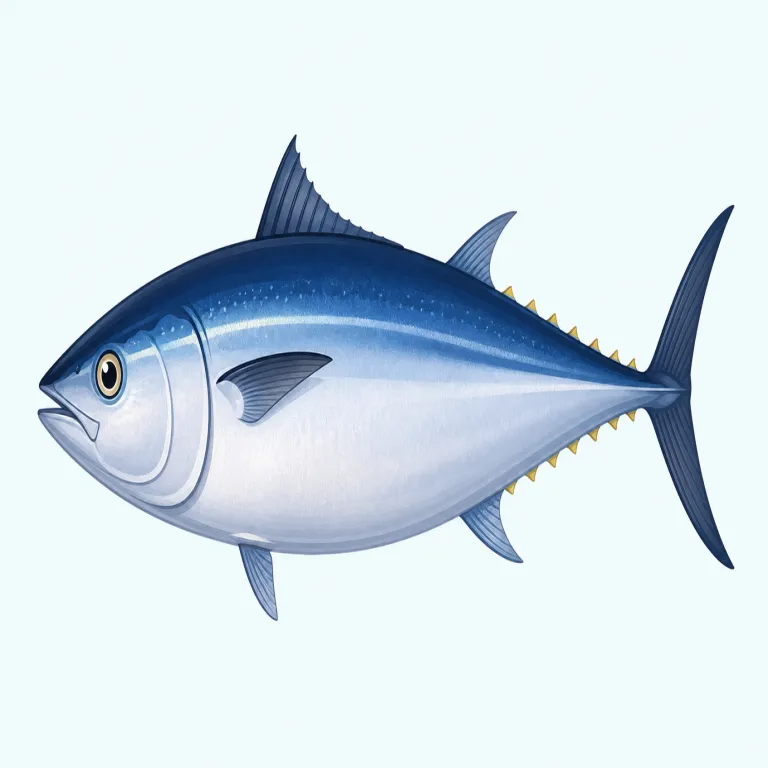
マグロ
解説 Definition
海に生息する大型の回遊魚で、食用として広く親しまれている魚。刺身や缶詰などに使われる。
A large ocean fish that swims long distances and is widely eaten. Its flesh is used for sashimi, cooked dishes, and canned food.
覚え方のコツ Memory Tip
tuna は日本語でも料理名の「ツナ」として身近ですが、英語では缶詰だけでなく魚の「マグロ」全体を指します。海を速く泳ぐ大きな魚と、食卓の切り身や缶詰を一本につなげて覚えましょう。食材としては fresh tuna「新鮮なマグロ」、grilled tuna「焼いたマグロ」、a tuna sandwich「ツナサンド」が頻出です。食べ物の tuna はふつう数えず、eat tuna のように冠詞を付けません。一方、一匹の魚を指す文脈では a tuna と言えます。「ツナ=缶詰だけ」と狭く覚えないことが定着のこつです。
Connect the large, fast-swimming ocean fish with the fresh slices and canned fish on your plate. Remember that tuna refers to the fish itself as well as its meat, not just the canned food. As food, it is usually uncountable, but you can say "a tuna" when referring to one fish.
例文
We ate fresh tuna for dinner.
私たちは夕食に新鮮なマグロを食べた。
She made a tuna sandwich for lunch.
彼女は昼食にツナサンドを作った。
This restaurant serves grilled tuna.
このレストランでは焼いたマグロを出している。
tuna の語源・成り立ち Etymology
スペイン語 atún からで、さらにアラビア語 tūn、ラテン語 thunnus、ギリシャ語 thynnos(突進する魚)に遡る。語根は thynō(突進する)で、マグロが高速で泳ぐ習性に由来。英語では16世紀頃にスペイン語経由で定着した。
The word comes from Spanish atún and can be traced back to Latin thunnus and Greek thynnos.
同じレベルの語彙をもっと
外部辞書で調べる
この英単語をクイズで覚えよう