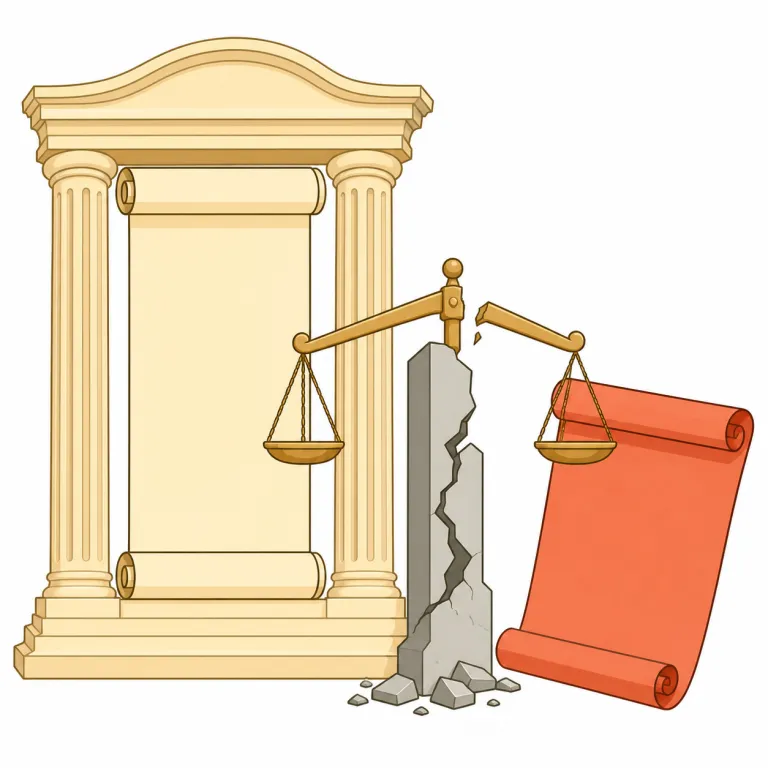
違憲の
解説 Definition
違憲の(いけんの)とは、国の憲法に反している、または違反しているという意味です。法的に無効とされる性質を表します。
If something is unconstitutional, it does not agree with a country's constitution. The word is mainly used in law and politics for actions, rules, or decisions by governments. It suggests that something is legally invalid at the highest level.
覚え方のコツ Memory Tip
まず constitutional をひとかたまりで覚えると楽です。constitution が「憲法」なので、constitutional は「憲法にかなった/憲法上の」。そこに否定の un- が付いて、意味がそのまま反転して「違憲の」になります。illegal や unlawful は広く「違法」ですが、unconstitutional はとくに「憲法に反する」ときに使う語。an unconstitutional law, ban, policy のように、法律・規制・政策が裁判で問題にされる場面と結びつけると定着しやすいです。
Break it into un- + constitutional. If constitutional means "in line with the constitution," then unconstitutional is the direct opposite. It is more specific than illegal, so connect it with phrases like "an unconstitutional law" or "an unconstitutional policy."
例文
The court ruled the law unconstitutional.
裁判所はその法律を違憲と判断しました。
The judge called this policy unconstitutional.
裁判官はこの政策を違憲と判断しました。
The government removed the unconstitutional rule.
政府は違憲の規則をなくしました。
unconstitutional の類義語・関連語
unconstitutional の語源・成り立ち Etymology
unconstitutional は un-「否定」+ constitutional + -al。constitution はラテン語 constituere「組み立てて定める」にさかのぼり、constitute も同根です。国の組み立てに反するものだから「違憲の」となる、と意味の筋道が見えます。
Unconstitutional is built from un-, constitutional, and -al. Constitution comes from Latin constituere, meaning "to set up" or "to establish," and it is related to constitute. So the word literally describes something that goes against the established structure or basic law of a state.
同じレベルの英単語をもっと
外部辞書で調べる
この単語を英単語クイズで覚えよう