意味一覧 (2件)
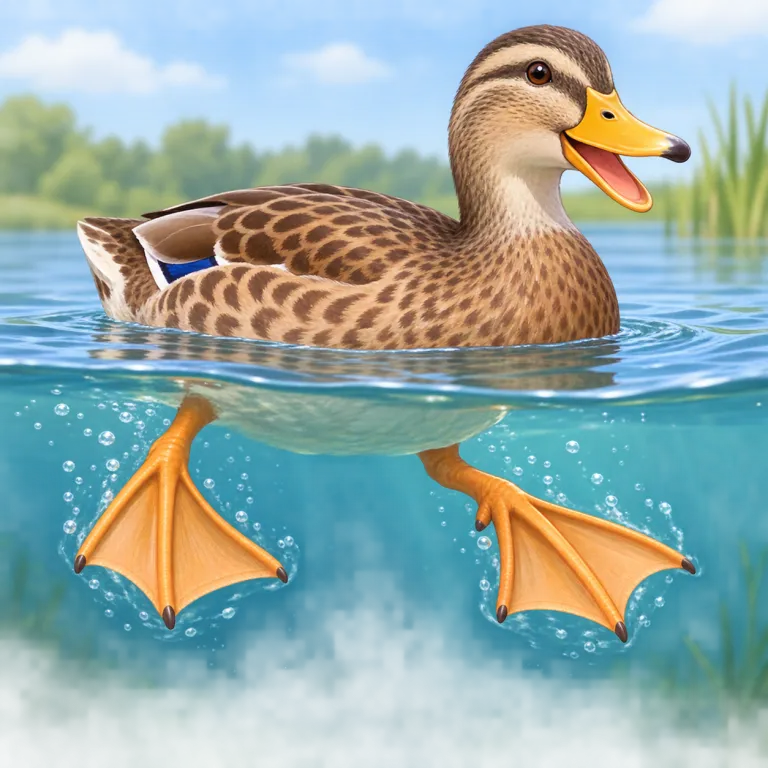
水かき
解説 Definition
webbing は、アヒルやカエルなどの指の間をつなぐ膜状の組織、つまり水かきを指します。水を押す面を広げ、泳ぐのに役立つ構造について使われます。
Webbing is the thin membrane connecting the toes or fingers of certain animals, especially animals adapted for swimming. It increases the surface area used to push against the water.
覚え方のコツ Memory Tip
webbing は、アヒルやカエルの足指の間をつなぐ膜状の組織、つまり「水かき」です。web には網状につながったものという意味があり、指の間に膜が張られた形を連想できます。webbing between the toes という組み合わせで、水を押す面を広げて泳ぐ構造を表します。
Picture a web joining an animal’s toes. Webbed feet have this connecting membrane, and the membrane itself is called webbing.
例文
Ducks have webbing between their toes that helps them swim.
アヒルの足指の間には、泳ぐのに役立つ水かきがあります。
The frog spread the webbing between its toes as it kicked.
そのカエルは水を蹴るとき、足指の間の水かきを広げました。
This species has less webbing on its feet than other water birds.
この種の足の水かきは、ほかの水鳥より小さくなっています。
丈夫な帯状織物
(意味 2)
解説 Definition
webbing は、ストラップ・ベルト・安全装備などに使われる、細長く丈夫に織られた布地を指します。製品そのものではなく、それらを作ったり補強したりする帯状の素材です。
Webbing is strong, narrow woven fabric used to make or reinforce straps, belts, harnesses, and similar equipment. It refers to the material rather than necessarily to a finished strap or belt.
覚え方のコツ Memory Tip
webbingは、ナイロンなどを細長く丈夫に織った帯状の素材です。nylon webbing、seat-belt webbingのように素材名や用途と組み合わせ、バックパックの肩ひもや安全装備の補強に使われます。完成したベルトやストラップ全体ではなく、それを作る丈夫な織物を指す点が手掛かりです。
Start with web as something made from interlaced strands. Webbing is a dense woven version shaped into a strong, narrow strip for straps and equipment.
例文
The backpack uses nylon webbing for its shoulder straps.
そのバックパックの肩ひもには、ナイロン製の丈夫な帯状織物が使われています。
Replace the webbing if it becomes frayed or badly worn.
帯状織物がほつれたりひどく摩耗したりしたら交換してください。
She threaded the webbing through the metal buckle.
彼女は帯状織物を金属製のバックルに通しました。
webbing の類義語・関連語
webbing の語源・成り立ち Etymology
webbing は web「網状のもの、織られたもの」に -ing が付いた語です。web は古英語 webb にさかのぼり、糸などがつながった構造を表しました。その網状のつながりになぞらえて、動物の指の間の膜も webbing と呼ばれます。
Webbing is formed from web with -ing. Web goes back to Old English webb and referred to a woven or interconnected structure. The membrane joining an animal’s digits was named for its web-like connection.
同じレベルの語彙をもっと
外部辞書で調べる
この英単語をクイズで覚えよう