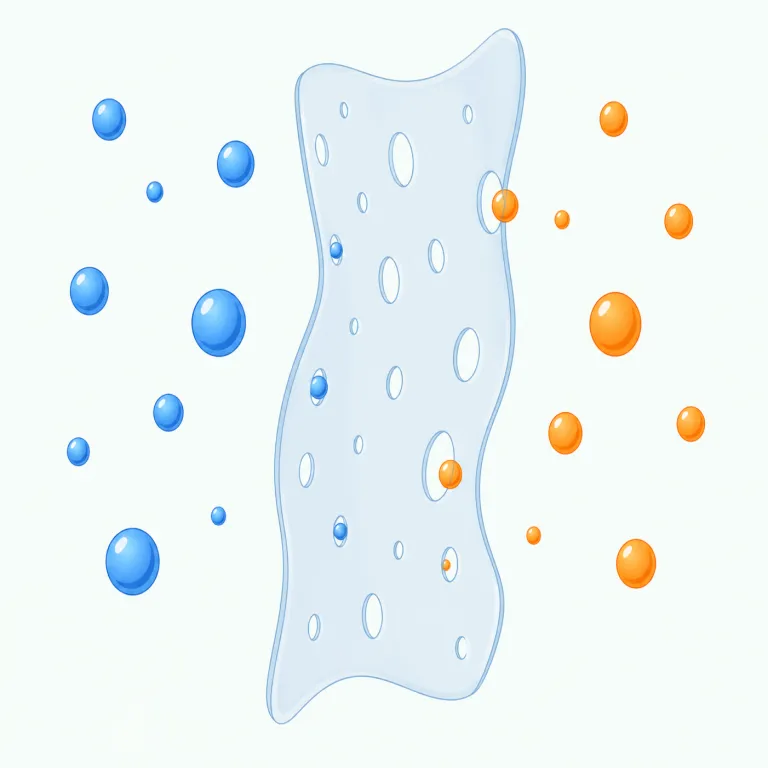
membrane
membrane は英検準1級レベルの英単語で、「膜」という意味があります。発音記号は /ˈmɛmˌbreɪn/ です。
膜
解説 Definition
細い皮やフィルムのような層。細胞の周りなど、生物の体の中に存在します。
A membrane is a thin layer of tissue or material that covers, separates, or protects something. It is often used in biology and medicine to describe parts of the body, but it can also refer to a thin artificial layer in science or technology.
覚え方のコツ Memory Tip
membrane は「中身を包む薄い layer / film」の感覚で覚えると残りやすい語です。skin よりも医学的・科学的で、wall のように硬い壁ではなく、薄く柔らかい境界を指します。cell membrane, mucous membrane など、細胞や器官を“完全に囲むシート”としてよく出ます。member のように中の構成要素ではなく、それを包む外側の境界だと対比すると混同しにくくなります。
Think of `membrane` as a thin medical or science layer, not a hard wall. It often appears in phrases like `cell membrane`, so picture a soft sheet wrapping something. Do not mix it up with `member`: a `member` is inside a group, but a `membrane` is the outside boundary.
例文
The cell membrane controls what enters and exits the cell.
細胞膜は細胞に出入りするものを制御します。
A thin membrane separates the two chambers.
薄い膜が2つの部屋を分けています。
The mucous membrane lines the inside of the mouth.
粘膜は口の内側を覆っています。
えいたんごクイズでの正答率
この語をはじめて出題された 30人 のうち 17人 が正解しました(57%)。
えいたんごクイズの回答から集計した独自データです。1人につき最初に出題されたときの1回だけを数えており、復習や2回目以降の回答、「わからない」と時間切れは含みません。 集計時点は 2026年9月19日 です。
membrane の類義語・関連語
membrane の語源・成り立ち Etymology
membrane はラテン語 membrana「薄い皮、膜」に由来し、member と同じく membrum「体の一部」が遠い語源です。分解語ではないものの、「体の部位を包む薄皮」から今の「膜」になったと見ると、member や dismember とのつながりも見えます。
Membrane comes from Latin membrana, meaning "thin skin" or "covering." It is distantly related to membrum, meaning "limb" or "part of the body," which also gave English member. The idea developed from a thin skin around a body part to the general sense of a thin natural or artificial film.
同じレベルの語彙をもっと
英検準1級の一覧へ →外部辞書で調べる
この英単語をクイズで覚えよう