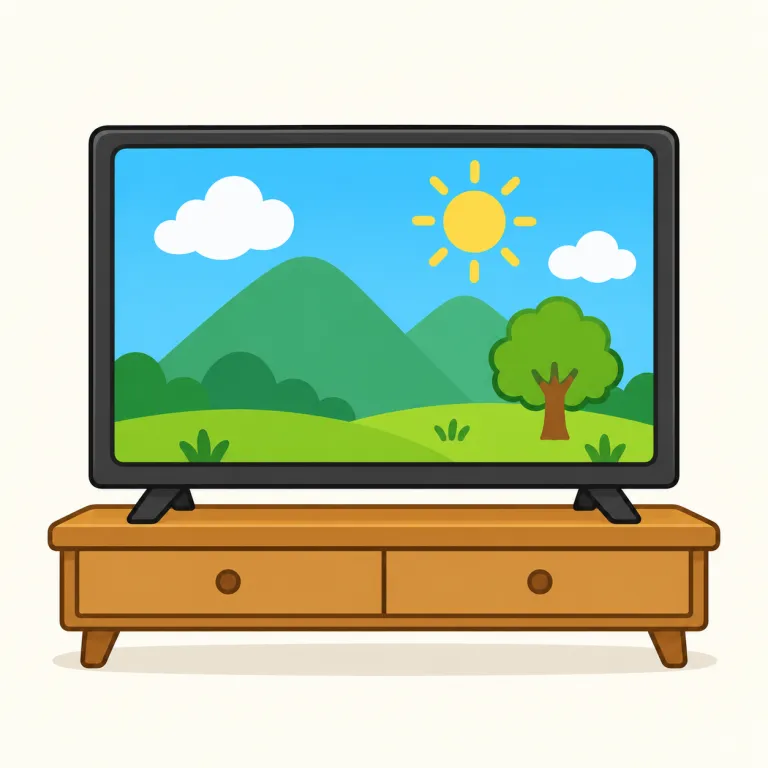
テレビ
解説 Definition
テレビ (Televisionの略)
An abbreviation of television, referring either to the system and programs of transmitted moving images and sound or to a device on which those programs are watched. It commonly appears in expressions such as watch TV and turn on the TV.
覚え方のコツ Memory Tip
TV は television の T と V を取った略語です。tele- は「遠く」、vision は「見ること」に関係し、遠くから送られた映像を見る仕組みと結び付けます。watch TV は番組・テレビ放送を見ること、turn on the TV や The TV is in my room の TV は機器を指します。通常、一般的な視聴では冠詞なしで watch TV と言います。
TV takes the first letters of television, so connect T with tele- and V with vision. Tele- relates to distance, and vision relates to seeing: television lets people see moving images transmitted from elsewhere. Notice two common patterns. Watch TV usually means watch television programs and normally has no article. Turn on the TV or The TV is in my room refers to the physical device and therefore uses the. This program-versus-device contrast makes everyday usage easier to remember.
例文
I watch TV after dinner.
私は夕食のあとにテレビを見ます。
The TV is in my room.
テレビは私の部屋にあります。
TV の類義語・関連語
TV の語源・成り立ち Etymology
television(テレビ)の頭文字を取った略語です。television は「遠く」を表す tele- と「見ること」を表す vision からできています。
TV is an initial abbreviation of television. The longer word combines tele-, from Greek and meaning “far” or “at a distance,” with vision, a word connected with seeing and ultimately derived from Latin. The name describes technology that conveys images from a distance. In modern English, TV can refer to television broadcasting, its programs, or an individual television set, depending on the surrounding grammar.
外部辞書で調べる
この英単語をクイズで覚えよう