随伴行列・随伴作用素
解説 Definition
数学で行列やリー代数に関連する随伴行列・随伴作用素のこと。
An adjoint is a related mathematical object or operator that is defined from another one in a special, exact way. It is used in advanced mathematics and physics, especially in linear algebra and functional analysis. The meaning depends on the field, so it is usually understood as a technical term.
覚え方のコツ Memory Tip
まず `joint` を軸に覚えるとよい語です。joint は「つなぎ目・結合」で、`ad-` が付くと「本体に付けて結びついたもの」という感覚になります。数学の adjoint も、元の行列や作用素と“対になって対応する相手”だと捉えると定着しやすいです。単独で意味を持つというより、必ず何かの adjoint として現れる語。`adjacent` の「隣接」と混同しやすいので、adjoint は「隣にある」ではなく「対応関係で結びつく」と区別すると覚えやすいです。
Notice the middle word `joint`, which suggests a close connection. In math, an `adjoint` is not just nearby; it is a partner defined in relation to something else. Remember it as a word that almost always appears in the pattern `the adjoint of ...`.
例文
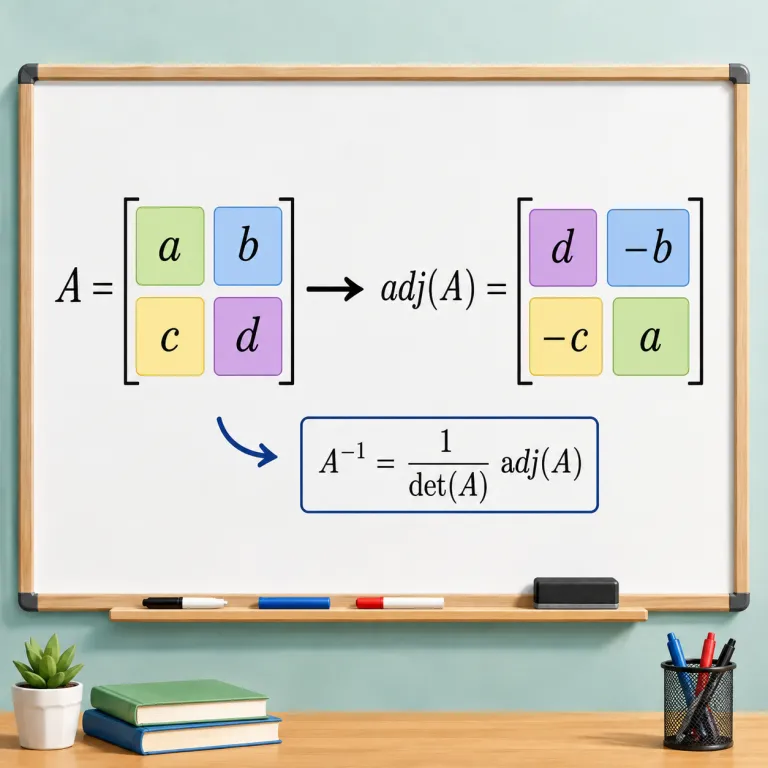
The adjoint of a matrix plays a key role in computing its inverse.
行列の随伴行列は、その逆行列を計算する上で重要な役割を果たす。
In functional analysis, the adjoint operator preserves certain algebraic properties.
関数解析では、随伴作用素は特定の代数的性質を保存する。
The professor explained how to compute the adjoint using cofactor expansion.
教授は余因子展開を使って随伴行列を計算する方法を説明した。
adjoint の類義語・関連語
adjoint の語源・成り立ち Etymology
adjoint は ad-「〜へ」+joint「結びついたもの」で、ラテン語 iungere「つなぐ」にさかのぼる。原義は「そばに結び添えられたもの」で、数学では主対象に密接に対応する行列や作用素を指す。join や junction も同じ語根。
Adjoint is made from ad- "to, toward" and joint, and goes back to Latin iungere, meaning "to join." Its earliest sense is something joined closely to something else. That idea later became more technical in mathematics, where it names something attached or corresponding in a precise way; join and junction share the same root.
同じレベルの語彙をもっと
外部辞書で調べる
この英単語をクイズで覚えよう