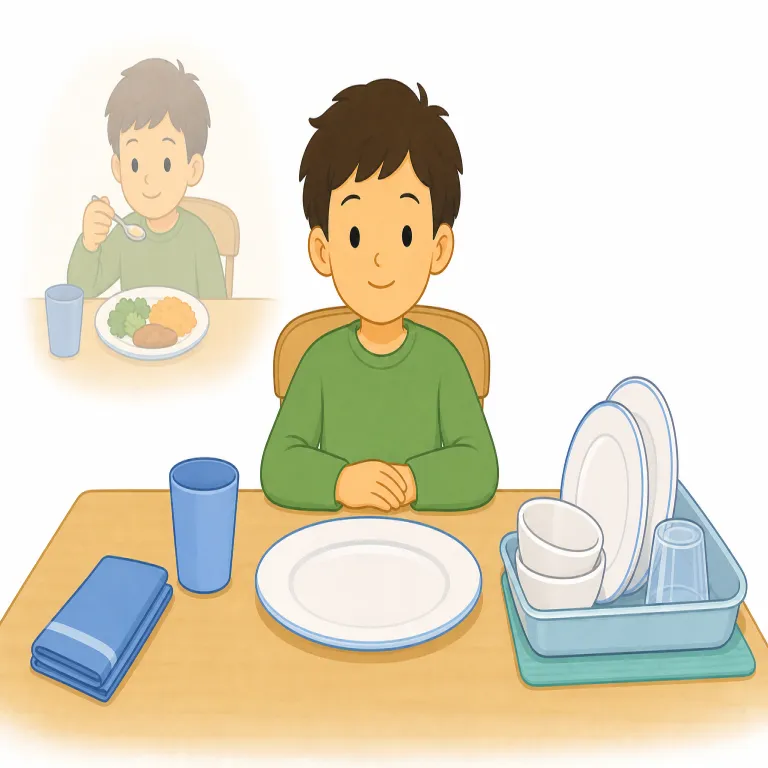
afterwards
afterwards は英検2級レベルの英単語で、「その後」という意味があります。発音記号は /ˈæftɚwɚdz/ です。
その後
解説 Definition
ある出来事が起きた後の時点、または後々という意味です。時間経過後、あるいはその後という時間的な関係を表します。
Afterwards means after that time or later. It is used to show that one event happens following another event. This word is common in both spoken and written English.
覚え方のコツ Memory Tip
核は after「〜の後」。そこに方向を表す -ward(s) が付いて「後の方向へ」→「その後で」と考えると覚えやすい。forward/backward/towards などと同じで、-ward(s) は向きや流れを足す部品だとまとめて記憶すると残る。会話なら after that とほぼ同じ感覚で置き換えられ、説明文では First ..., afterwards ... のように出来事を順につなぐ定番。later も似るが、afterwards は直前の出来事を受ける感じが強い。米語では afterward の綴りもよく見る。
Start with after, then notice -ward(s), which gives the idea of direction, like in forward or backward. So afterwards means moving to the time after something. It is often used to connect events: First ..., afterwards ...
例文
We eat lunch afterwards.
その後、私たちは昼食を食べます。
She goes home afterwards.
その後、彼女は家に帰ります。
I read a book afterwards.
その後、私は本を読みます。
えいたんごクイズでの正答率
この語をはじめて出題された 63人 のうち 51人 が正解しました(81%)。
えいたんごクイズの回答から集計した独自データです。1人につき最初に出題されたときの1回だけを数えており、復習や2回目以降の回答、「わからない」と時間切れは含みません。 集計時点は 2026年9月19日 です。
afterwards の類義語・関連語
対義語
afterwards の語源・成り立ち Etymology
古英語 æfter(後に)+ weard(〜の方向へ)+ 副詞語尾 -s から成る。afterは「後ろ」、-wardは方向を示す接尾辞。関連語: afterward(同義)、forward(前方へ)。時間的に「後の方向へ」という空間メタファーが副詞化した語。
Afterwards is built from after, a directional element related to "toward," and the adverb ending -s. Its older parts come from Old English and originally expressed movement or direction. The idea was literally something like "toward what comes after," which later became a time adverb meaning later. A related form is afterward.
同じレベルの語彙をもっと
英検2級の一覧へ →外部辞書で調べる
この英単語をクイズで覚えよう