ごくわずかなもの
noun 名詞物事の極めて少ない量を表す比喩的な用法です。not an atom of truth や without an atom of evidence のように主に否定的な構文で使われ、「少しもない」と完全な欠如を強調するやや文語的な表現です。
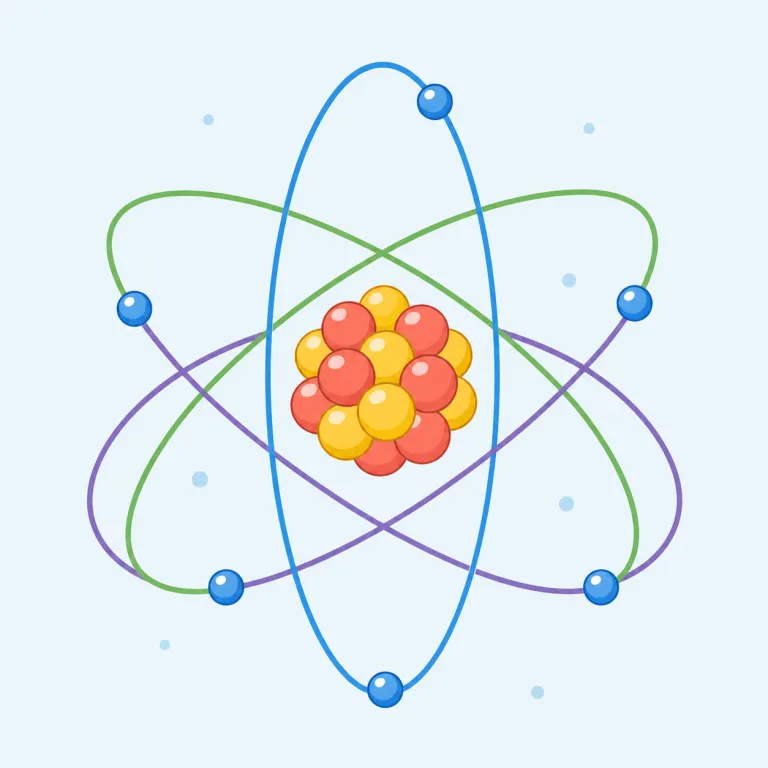
化学元素の性質を保つ最小の粒子。中心の原子核と、その周囲にある電子から構成される。
This noun names the smallest particle that retains the properties of a chemical element. It consists of a central nucleus with electrons around it.
atom は a-「〜でない」+ tom「切る」で、古代に「これ以上切り分けられないもの」と考えられた最小単位、と覚えると定着します。現代科学では原子核と電子から成ることが分かっていますが、語のイメージは「元素の性質を保つ小さな一粒」です。atom が一個の原子、molecule が複数の原子の結合である点を、水分子 H₂O は three atoms を含む、という図で区別します。a carbon atom、join with other atoms の形も頻出です。
Remember the parts "a-," meaning "not," and "tom-," meaning "cut," because ancient thinkers considered it impossible to divide further. In modern science, picture one tiny unit made of a nucleus and electrons, and distinguish it from a molecule formed from multiple such units.
An atom is extremely small.
原子は極めて小さい。
A water molecule contains three atoms.
水分子は三つの原子を含む。
A carbon atom can join with other atoms.
炭素原子はほかの原子と結び付くことができます。
文脈によって、次の意味でも使われます。
物事の極めて少ない量を表す比喩的な用法です。not an atom of truth や without an atom of evidence のように主に否定的な構文で使われ、「少しもない」と完全な欠如を強調するやや文語的な表現です。
atom はギリシャ語 atomos「これ以上切れないもの」からで、a-「否定」+ tom-「切る」に分けられます。『切っても分けられない最小単位』という発想が語源で、同じ tom を持つ anatomy や dichotomy にも『切る』の感覚が残ります。
The word comes from Greek "atomos," meaning "uncuttable." It combines "a-," expressing negation, with "tom-," meaning "cut."
この英単語をクイズで覚えよう