平議員
解説 Definition
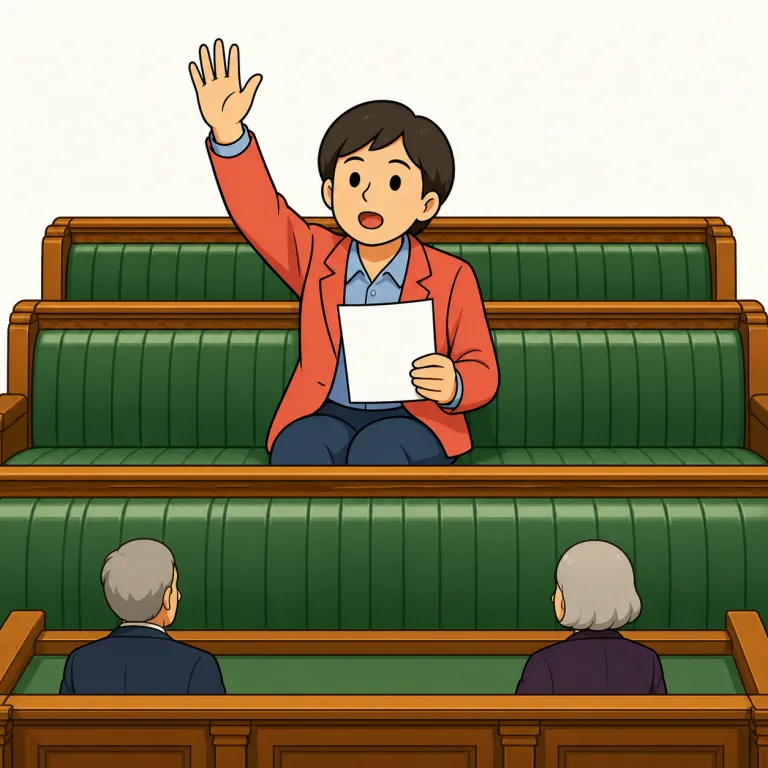
主に英国議会で、閣僚や党幹部などの要職に就いていない一般の議員を指す語。議場の後方席に座ることが多いことに由来し、執行部に属さずに法案審議へ参加したり、選挙区の有権者の声を代弁したりする立場を表す。
A backbencher is a member of parliament or another legislature who does not hold an important government or leadership position. The term comes from the seats in the back rows of the chamber. It is especially common in British politics.
覚え方のコツ Memory Tip
`back + bench + -er` と分けると覚えやすい語です。まず `bench` は議場の長い席、`back` は後ろ。つまり「後ろの席にいる人」という絵がそのまま意味につながります。英国政治では要職の人は `frontbencher` と呼ばれるので、`front` と `back` の対比で整理すると定着しやすいです。法案を動かす中心人物というより、執行部ではない一般議員・平議員を指す語だと押さえると、ニュース記事でも迷いにくくなります。
Split it into `back + bench + -er`. The picture is simple: a person sitting on the back benches in parliament. It is easiest to remember by contrast with `frontbencher`, who is in a more important leadership position.
例文
As a backbencher, she had limited influence on policy decisions.
平議員として、彼女の政策決定への影響力は限られていた。
Many backbenchers use their positions to voice constituents' concerns.
多くの平議員は、その立場を通じて選挙区の有権者の懸念を訴える。
The backbencher criticized the government's proposed legislation.
その平議員は、政府が提案した法案を批判した。
backbencher の類義語・関連語
対義語
backbencher の語源・成り立ち Etymology
back は古英語 bæc「後ろ」、bench は古英語 benc「長い腰掛け」、-er は「人」を表します。英国議会で後列の席に座る役職のない議員を指したことから、平議員の意味になりました。関連語は frontbencher、bench。
Backbencher is a compound of back, bench, and the agent ending -er. It grew out of British parliamentary language, where less important members sat on the benches behind the leaders. From that setting, it came to mean an ordinary member without high office.
同じレベルの語彙をもっと
外部辞書で調べる
この英単語をクイズで覚えよう