丘の頂、崖の縁
noun 名詞丘や崖などの上部にある、丸みを帯びた頂や突き出た縁を指します。the brow of a hillの形で使われることが多く、山全体の最高地点というより、地面が下り始める上端部分に焦点を当てた表現です。
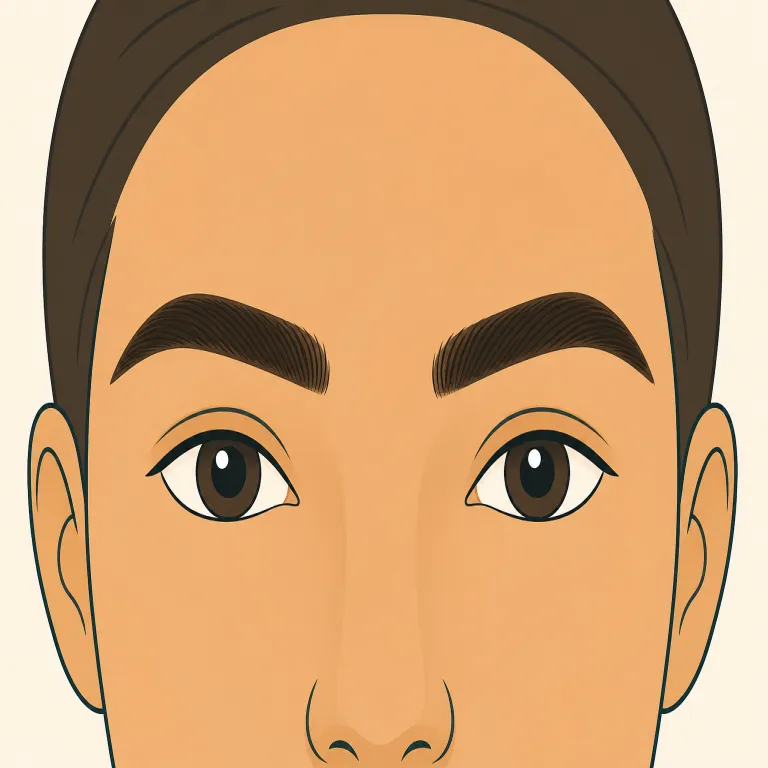
目の上に弓状に生えている毛、またはその周辺を指す語。表情や顔つきの描写でよく使われる。
The curved strip of hair above an eye, or the area immediately around it. It can also mean the forehead, the part of the face above the eyes. This noun often appears in descriptions of facial expressions.
目の上の「眉」やその周辺を指し、eyebrowより文学的・描写的に使われることがある。raise one browなら、驚きや疑いで「片眉を上げる」しぐさを表す。左右両方の眉をまとめて描写するときはdark browsのように複数形がよく使われる。
Connect brow with eyebrow and picture someone lifting one in surprise. The phrase 'raise one's brows' makes the movement easy to remember. Also picture someone wiping sweat from their forehead: in 'He wiped the sweat from his brow,' the word means forehead.
She raised one brow in surprise.
彼女は驚いて片方の眉を上げました。
His dark brows were easy to notice.
彼の濃い眉はよく目立ちました。
He wiped the sweat from his brow.
彼は額の汗を拭いました。
文脈によって、次の意味でも使われます。
丘や崖などの上部にある、丸みを帯びた頂や突き出た縁を指します。the brow of a hillの形で使われることが多く、山全体の最高地点というより、地面が下り始める上端部分に焦点を当てた表現です。
brow は古英語 bru「眉」に由来し、ゲルマン系の古い語で、ドイツ語 Braue とも同系です。目の上で張り出した部分を指す語なので、顔の「眉」から丘や崖の「縁・へり」という意味にも広がりました。関連語は eyebrow, browbeat です。
The word comes from Old English bru, meaning 'eyebrow.' It belongs to an old Germanic word family and is related to German Braue.
この英単語をクイズで覚えよう