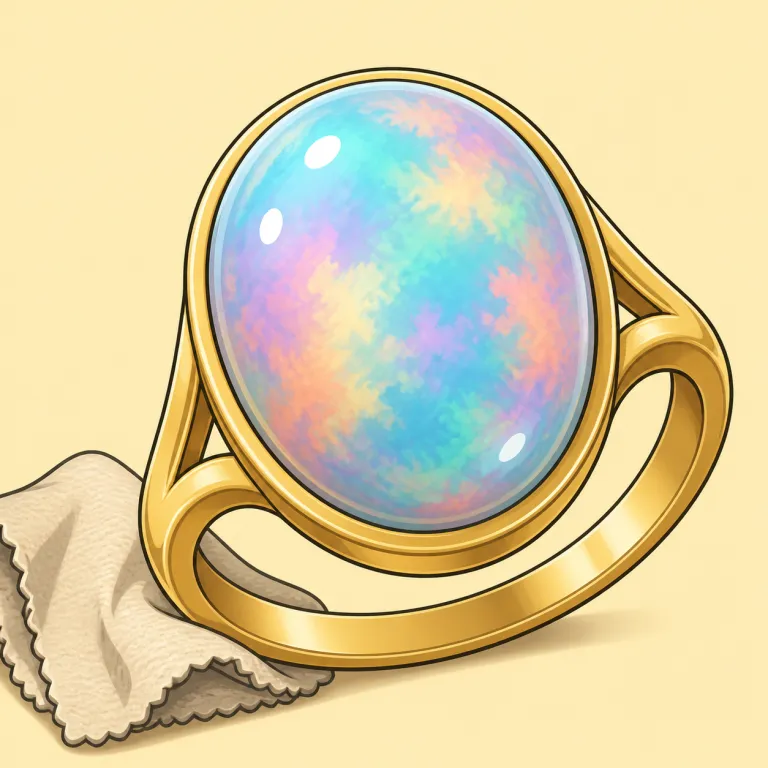
丸く磨いた宝石
解説 Definition
表面をなめらかな丸みのある形に磨き上げ、切子面を付けずに仕上げた宝石、またはその研磨様式を指す名詞。オパールやトルコ石などでよく用いられ、石の色味や光沢をやわらかく見せる。
A cabochon is a gemstone that has been polished into a smooth, rounded shape instead of being cut with flat faces. This style is common in jewelry and is often used to show a stone's color or special surface effect. The word refers to the shape and finish of the stone.
覚え方のコツ Memory Tip
宝石名そのものというより、ジュエリーの説明で出る“形・研磨法のラベル”として覚えると定着しやすい語です。cut stone や faceted gem が「面でキラッと光る石」なのに対し、cabochon は「つるっと丸く盛り上がり、面がない石」。特に opal, turquoise, moonstone などと一緒に出やすいので、「色や艶をやわらかく見せる丸い磨き」と場面で結ぶとよいです。brilliant cut のようなカット宝石と対比で覚えると混同しません。
Remember this as a jewelry word for shape, not the name of one stone. A `cabochon` is the opposite of a faceted gem: smooth, rounded, and without flat shining faces. Think of opal or moonstone polished into a soft dome shape.
例文
The opal was cut as a cabochon and set in the ring.
そのオパールはカボションに研磨され、指輪に留められていた。
Cabochons highlight color rather than sparkle.
カボション仕上げの石は輝きよりも色合いを引き立てる。
She chose a moonstone cabochon for the pendant.
彼女はペンダント用にムーンストーンのカボションを選んだ。
cabochon の類義語・関連語
紛らわしい語
cabochon の語源・成り立ち Etymology
cabochon はフランス語 cabochon に由来し、caboche「頭」+ -on で「小さな頭のようなもの」が原義です。caboche はラテン語 caput「頭」にさかのぼり、cabbage や capital も同根なので、丸く盛り上がった石が「頭形の石」と呼ばれた理由が腑に落ちます。
Cabochon comes from French cabochon, based on caboche, meaning "head," with a suffix that gives the sense of something small. Caboche goes back to Latin caput, also meaning "head." The name was used for a rounded polished stone because its smooth raised shape looked like a little head; related English words from the same root include capital and cabbage.
同じレベルの語彙をもっと
外部辞書で調べる
この英単語をクイズで覚えよう