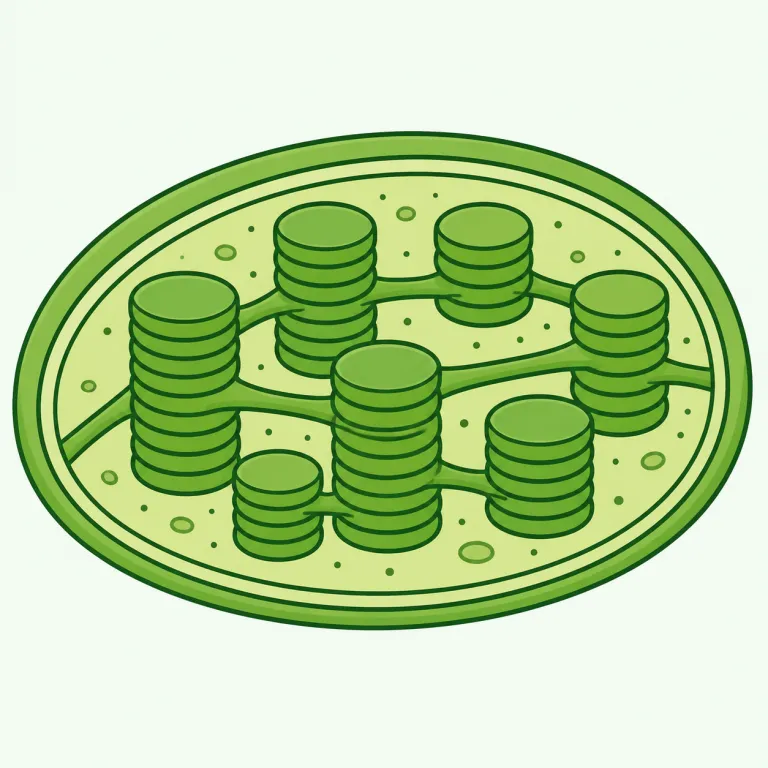
葉緑体
解説 Definition
植物細胞に含まれる緑色の細胞小器官。光合成を行い、光エネルギーを化学エネルギーに変換する。
A chloroplast is the part of a plant cell where photosynthesis happens. It contains chlorophyll, the green substance that helps plants use light to make food. This word is mainly used in biology.
覚え方のコツ Memory Tip
まず chlorophyll(葉緑素)を知っているなら、chlo(ro)- を見た時点で「緑・植物まわり」を連想すると定着しやすいです。さらに photo-synthesis と結びつけて、「光合成をする細胞内パーツ」が chloroplast。plant cell の説明でよく出る定番語です。-plast は amyloplast, chromoplast などにも見られるので、「細胞内の〇〇体」という理科語の型として覚えると広がります。mitochondria が“エネルギー産生全般”なのに対し、chloroplast は“植物で光を使う場所”と区別すると混同しにくいです。
If you know `chlorophyll`, the beginning `chloro-` can remind you of green plants. Then connect `chloroplast` with photosynthesis in plant cells. It helps to remember it as a science word for a special cell part, not the whole cell.
例文
The chloroplast captures sunlight and converts it into chemical energy through photosynthesis.
葉緑体は太陽光を捕らえ、光合成を通じて化学エネルギーに変換する。
Under the microscope, the chloroplasts appeared as small green discs within the plant cells.
顕微鏡で観察すると、葉緑体は植物細胞内で小さな緑色の円盤状に見えた。
Scientists believe that chloroplasts originated from ancient cyanobacteria through endosymbiosis.
科学者たちは、葉緑体が古代のシアノバクテリアとの細胞内共生によって生じたと考えている。
chloroplast の類義語・関連語
紛らわしい語
chloroplast の語源・成り立ち Etymology
ドイツ語 Chloroplast を経て英語化した科学語で、ギリシャ語 khloros「黄緑の」+ plastos「形づくられたもの」から成る。chlorophyll や plastic と同根で、文字どおり「緑の形ある小体」なので葉緑体を指す。
Chloroplast is a scientific word that came into English through German. It is built from Greek khloros, meaning "greenish-yellow," and plastos, meaning "formed" or "molded." The sense is literally a "green formed body," and related English words include chlorophyll and plastic.
同じレベルの語彙をもっと
外部辞書で調べる
この英単語をクイズで覚えよう