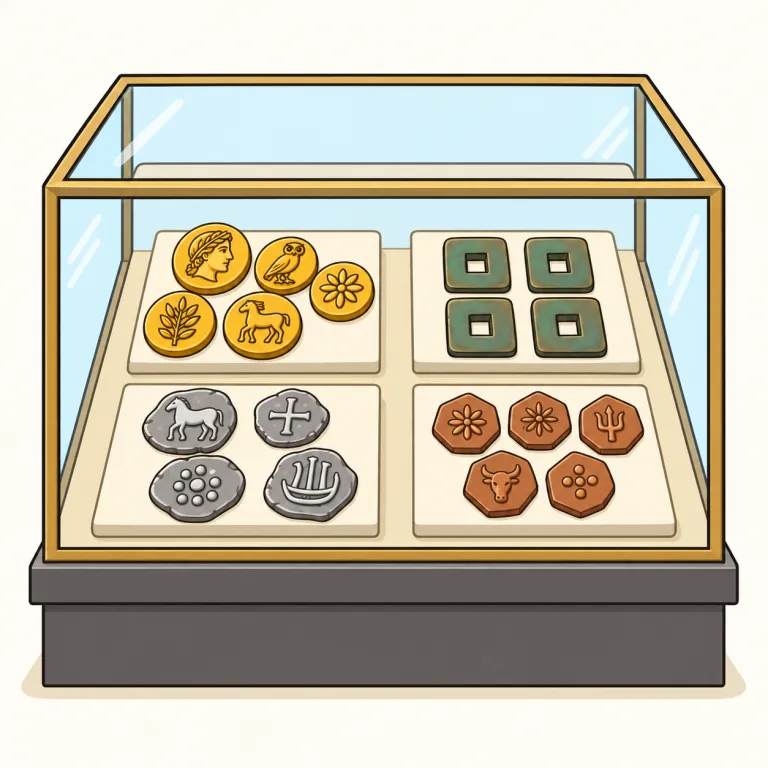
貨幣
解説 Definition
coinage は coin(硬貨)に関連する名詞で、硬貨や貨幣制度、または貨幣の鋳造を意味します。比喩的に新しく作られた語を指すこともありますが、ここでは貨幣の意味で使います。
Coins considered collectively, especially those issued or used by a particular country, society, or historical period. The word can also denote the system or process of making coins, but here it refers primarily to metallic currency.
覚え方のコツ Memory Tip
coin「硬貨」に、集合・結果や行為を表す -age が付いた名詞です。この語義では一枚の coin ではなく、ある国や時代の「硬貨全体」や「貨幣制度・鋳造」を指します。ancient coinage、Roman coinage のように時代・地域名と組み合わせ、currency より特に硬貨へ焦点を置く語と覚えましょう。
See coinage as coin plus the noun-forming suffix -age. In this sense, it usually means coins viewed as a group, not one individual coin. A museum may display Roman coinage or coinage from several ancient kingdoms, so connect the word with a collection identified by its place or period. Currency is broader because it can include notes and other recognized forms of money, whereas coinage often focuses on metal coins and may also refer to their production or official system. This contrast makes the historical use especially easy to remember.
例文
The museum displays coinage from several ancient kingdoms.
その博物館には、いくつかの古代王国の貨幣が展示されています。
Roman coinage often carried the image of an emperor.
ローマの貨幣には皇帝の肖像が刻まれていることがよくありました。
The study compares the coinage used in different trading cities.
その研究は、異なる交易都市で使われた貨幣を比較しています。
coinage の類義語・関連語
coinage の語源・成り立ち Etymology
古仏語coign(くさび・造幣型)に由来し、ラテン語cuneus(くさび)が語源です。coin(打って作る)に-age(結果・集合)が付き、「鋳造貨幣の総称」となりました。同語根のcuneiform(楔形文字)とも「くさびで刻む」というイメージで繋がり、納得しやすい成り立ちです。
Coinage was formed from coin with the suffix -age, which can indicate an action, result, or collective body. Coin came through Old French coign, originally a wedge or the die used for stamping money, from Latin cuneus, “wedge.” Because coins were produced by striking metal with a die, the word developed from the tool and process to the stamped money itself; coinage then denoted minting or coins collectively.
同じレベルの語彙をもっと
外部辞書で調べる
この英単語をクイズで覚えよう