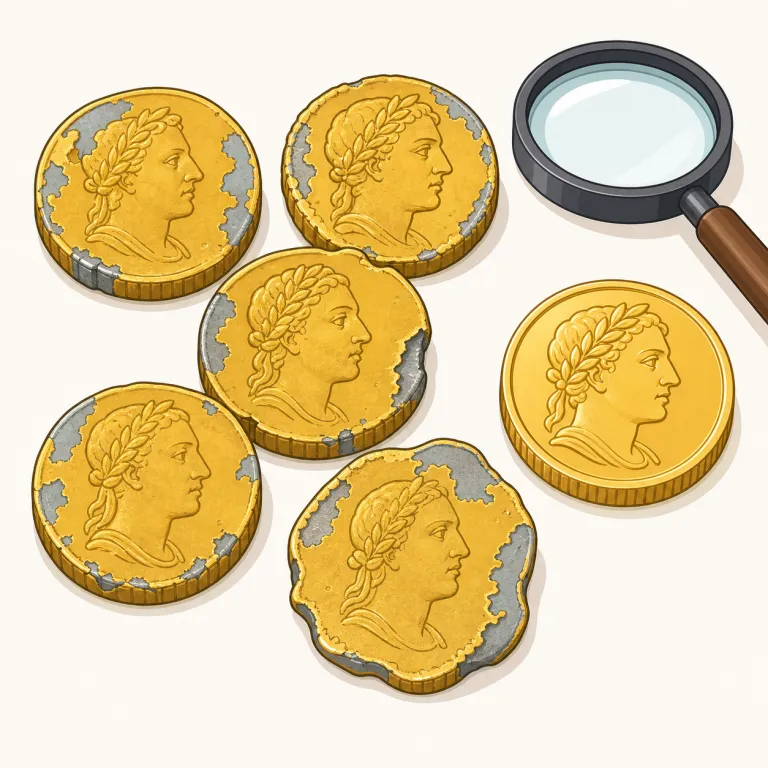
偽物
解説 Definition
偽造品や模造品のこと。特に偽造通貨や偽ブランド品を指す。
Counterfeits are fake objects made to look real, usually in order to deceive people. The word is often used for money, brand-name goods, documents, or artworks. It usually has a negative or illegal meaning.
覚え方のコツ Memory Tip
counter- は counterattack のように「対抗する・逆らう」の感覚で覚えると、counterfeit は「本物に対抗して、そっくりに作られた物」というまとまりで残る。会話の fake より硬く、ニュースや警察・税関の文脈でよく出る語。counterfeit bills / goods / passports のように、紙幣・ブランド品・書類など「本物に見えるが違法な偽物」を指す。単なる imitation よりも、だます意図や違法性が強い点をセットで覚えると迷いにくい。
Notice `counter-` and think of something set against the real thing. A `counterfeit` is not just a copy, but something made to look real in order to deceive. Common pairs like `counterfeit bills`, `counterfeit goods`, and `counterfeit passports` make it easier to remember.
例文
Customs officials seized a shipment of counterfeits at the border.
税関職員は国境で偽造品の積荷を押収した。
The market was flooded with counterfeits that were nearly indistinguishable from genuine products.
市場には本物とほとんど見分けがつかない偽造品が溢れていた。
She unknowingly purchased counterfeits, believing they were authentic designer handbags.
彼女は本物のブランドハンドバッグだと信じて、知らずに偽物を購入してしまった。
counterfeits の類義語・関連語
派生語
紛らわしい語
counterfeits の語源・成り立ち Etymology
counterfeit は古フランス語 contrefait に由来し、contre-「反対に」+ faire「作る」で「本物に似せて作る」が原義。fact や manufacture も同じラテン語 facere 系で、語源を知ると「偽物」はただのウソでなく「本物らしく作った物」だと見えてくる。
Counterfeit comes from Old French contrefait, literally "made in imitation," from contre- "against, in imitation" and faire "to make." The deeper root is Latin facere, "to make or do," also seen in words like fact and manufacture. The meaning developed from something made to copy the real thing into the modern idea of a fake object.
同じレベルの語彙をもっと
外部辞書で調べる
この英単語をクイズで覚えよう