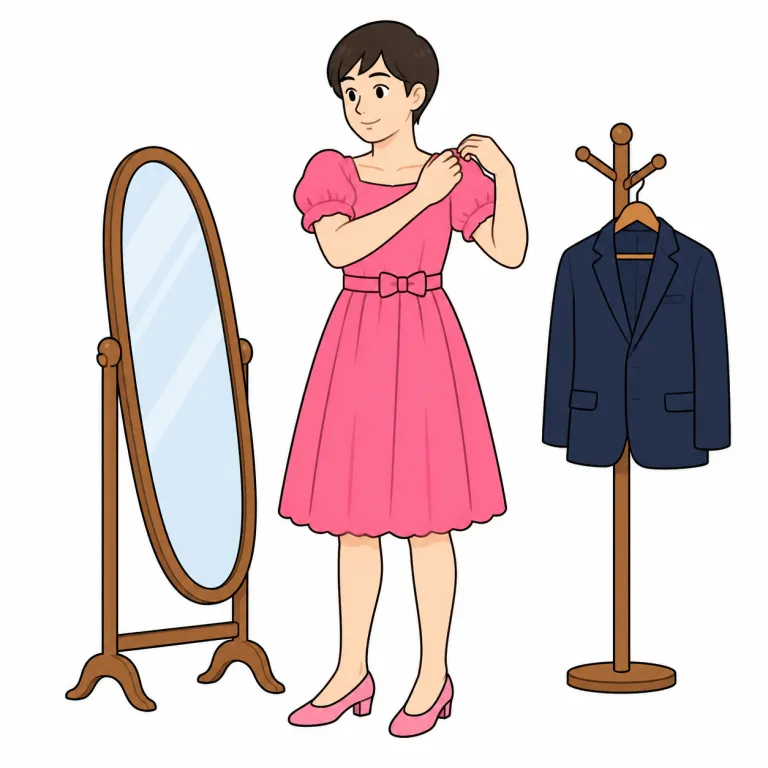
異性装
解説 Definition
自分の性別とは異なる性別の服装をすること。異性装。
Crossdressing is the act of wearing clothes that are usually associated with a different gender. It is often used when talking about personal expression, performance, fashion, or identity. The word describes clothing behavior itself and does not automatically show someone's gender identity or sexual orientation.
覚え方のコツ Memory Tip
cross + dressing と分けると覚えやすいです。cross は cross the street のように「横切る・越える」、dressing は salad dressing ではなく dress の -ing で「服を着ること・装い」。合わせて「性別の境界を越える服装」という像が作れます。和訳では「女装」と出ることがありますが、語そのものは男性が女性の服を着る場合だけでなく、異なる性別の服装をする行為一般を指します。名詞なので人そのものではなく行為・状態を指す点にも注意。
Split it into `cross` + `dressing`. `Cross` often suggests going across a line or boundary, and `dressing` here is about wearing clothes, not salad dressing. Think of clothes that cross a gender boundary, and remember it names the act or style, not the person.
例文
Crossdressing has been a common theatrical device in plays since Shakespeare's era.
異性装はシェイクスピアの時代から演劇で一般的な手法であった。
The documentary explored the history and cultural significance of crossdressing across different societies.
そのドキュメンタリーは、異なる社会における異性装の歴史と文化的意義を探った。
She enjoyed crossdressing as part of her creative self-expression at costume events.
彼女はコスチュームイベントでの創造的な自己表現の一環として異性装を楽しんでいた。
crossdressing の類義語・関連語
類義語
crossdressing の語源・成り立ち Etymology
crossdressing は cross「反対側へ・境を越えて」と dressing「装い」の結合です。dress は古フランス語 dresser を経て directus「整える」に連なり、direct と同根。『身なりを整える』ことに cross が付くので、性別の境を越えた装い、つまり女装を含む異性装という意味になります。
Crossdressing combines cross, in the sense of going across or to the other side, with dressing. Dress came through Old French dresser and is linked to Latin directus, also seen in direct, with an earlier idea of arranging or setting straight. From the sense of arranging one's appearance, the compound came to mean wearing clothes associated with another gender.
同じレベルの語彙をもっと
外部辞書で調べる
この英単語をクイズで覚えよう