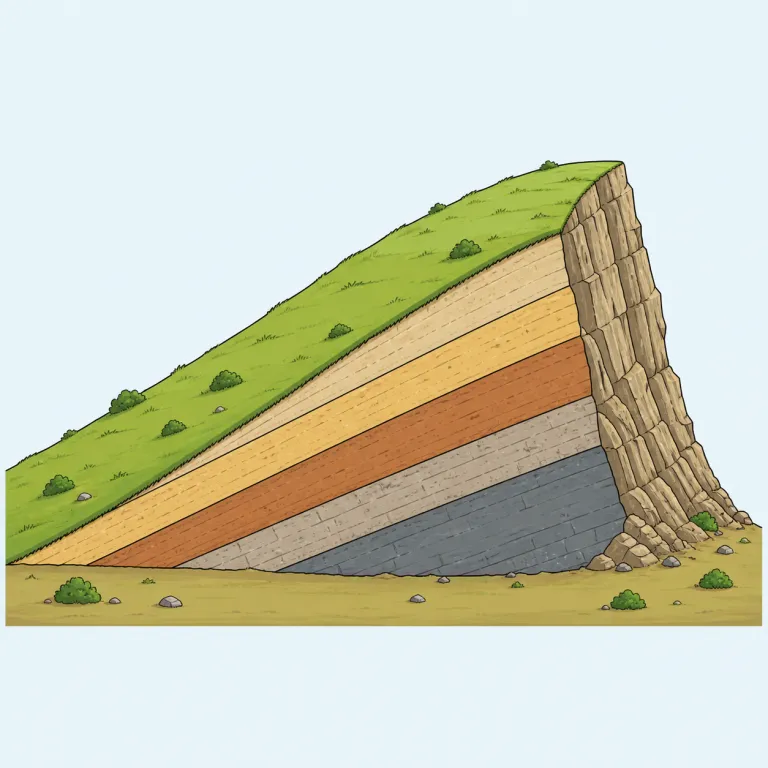
ケスタ地形
解説 Definition
地層がゆるく傾いている地域で、片側がなだらかな斜面、反対側が急な斜面になることで生じる地形を指す名詞。地質構造と侵食の作用によって形成され、丘陵や尾根のように長く連なることが多い。
A cuesta is a long hill or ridge with a gentle slope on one side and a steep slope on the other. It is a geological landform created when rock layers tilt and wear away unevenly. This word is mainly used in geography and earth science.
覚え方のコツ Memory Tip
cuestaは単独の訳語より、地理図の一場面で固定すると残りやすい語です。『地層がゆるく傾く→侵食が進む→片側は長くなだらか、反対側は急になる』という流れを一枚絵で覚えると、ただの丘ではなく“左右非対称の斜面をもつ地形”だと区別できます。mesaやplateauが“上面の平らさ”で連想されるのに対し、cuestaは“傾いた地層が生む緩斜面と急斜面の対比”が核心。地学で ridge や landscape と並んで出たらこの像を思い出すと定着します。
Remember cuesta as a landform with two different sides. Picture tilted rock layers making one long gentle slope and one steep slope. Unlike mesa or plateau, the key image is this uneven pair of slopes.
例文
The cuesta formation is visible in the Grand Canyon's layered geology.
グランドキャニオンの層状の地質にはケスタ地形が見られます。
Geologists study cuestas to understand the region's tectonic history.
地質学者は地域の地殻変動の歴史を理解するためにケスタ地形を研究しています。
This cuesta extends for hundreds of miles across the plateau.
このケスタ地形は台地を横切って何百マイルも続いています。
cuesta の類義語・関連語
紛らわしい語
cuesta の語源・成り立ち Etymology
スペイン語 cuesta「坂・斜面」に由来し、さらにラテン語 costa「肋骨・わき・斜面」へさかのぼります。土地の“横腹”のように片側が急に落ちる地形だと考えると意味がつながります。coast や côte も同じく「側面」の感覚を残す同根語です。
Cuesta comes from Spanish cuesta, meaning a slope or hillside. It goes back to Latin costa, which meant a rib, side, or slope, so the idea is of land like a body's side. Related words such as coast and French côte keep the same sense of a side or edge.
同じレベルの語彙をもっと
外部辞書で調べる
この英単語をクイズで覚えよう