隆起、筋、畝
noun 名詞山地以外で、物の表面に沿って細長く盛り上がった部分を指します。屋根の棟、指紋の隆線、畑の畝などを表す際に使われ、点状の突起ではなく線状に続く形であることを強調します。
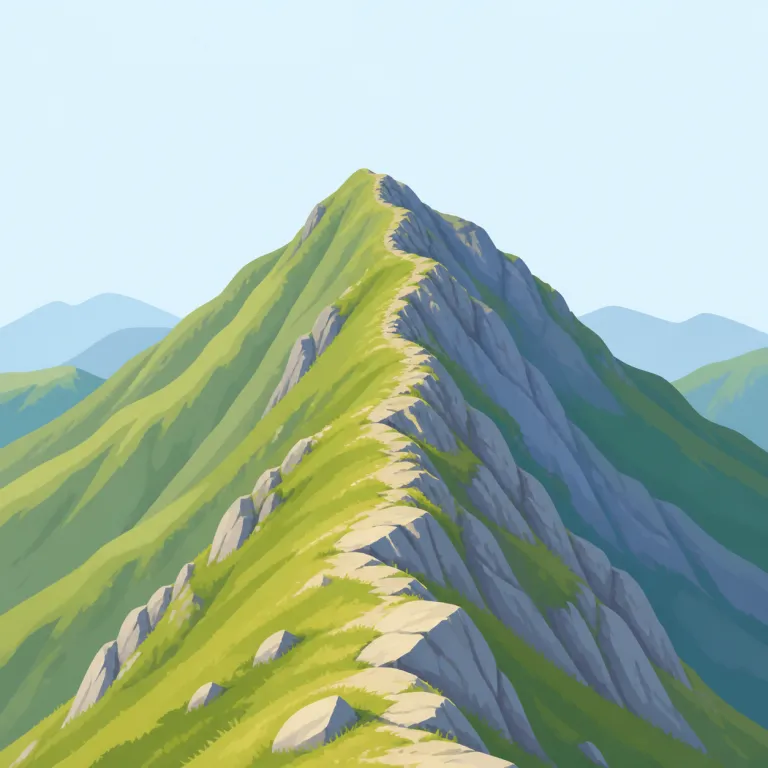
ridge は英検準1級レベルの英単語で、「尾根」という意味があります。発音記号は /rɪdʒ/ です。
山や丘の頂上で長く伸びる高い部分を指し、地形では高度の高い場所をつなぐ稜線を表します。自然地形の尾根の上を歩くときなどに使う言葉です。
A ridge is a long, narrow raised area, especially along the top of a mountain or hill. It can also mean a raised line on a surface. The word is common in geography and descriptions of nature.
ridge は「細長く盛り上がった線」を核にすると覚えやすいです。mountain ridge で山の尾根、roof ridge で屋根の棟、weather の文脈では a ridge of high pressure で高気圧の張り出し。point のような一点ではなく、背骨のように長く連なる高まりを指すのがコツ。edge は単なる縁、crest は頂上寄りですが、ridge はその高い部分が横に続く感じです。walk along the ridge と valley の対比で入れると定着します。
Think of a `ridge` as a long raised line, not just one high point. A mountain ridge, a roof ridge, and even a weather ridge all share that same shape. It helps to remember it next to `valley`: the ridge is the long high part.
The hikers reached the ridge after climbing for hours.
ハイカーは数時間登った後、尾根に到達しました。
The mountain ridge offered stunning views of the valley below.
山の尾根からは、眼下の谷の素晴らしい眺めが広がっていました。
A narrow ridge separates the two valleys.
細い尾根が二つの谷を隔てています。
文脈によって、次の意味でも使われます。
山地以外で、物の表面に沿って細長く盛り上がった部分を指します。屋根の棟、指紋の隆線、畑の畝などを表す際に使われ、点状の突起ではなく線状に続く形であることを強調します。
気象図で、周囲より気圧が高い領域が細長く張り出した部分を指します。a ridge of high pressure などの形で用いられ、低圧部が伸びる trough と対照的に扱われます。
ridge は古英語 hrycg「背・背骨・尾根」にさかのぼる語で、山並みを背中のような盛り上がりとして捉えた言葉です。細長く高く連なる「山の背骨」という感覚がそのまま「尾根」になり、ドイツ語 Rücken やオランダ語 rug も同じ仲間です。
This word comes from Old English hrycg, meaning "back" or "spine." It was used for a long raised line because people saw it like the back of a body. From that image, the meaning developed into the shape of a long high crest in the land. German Rücken and Dutch rug are related words.
この英単語をクイズで覚えよう