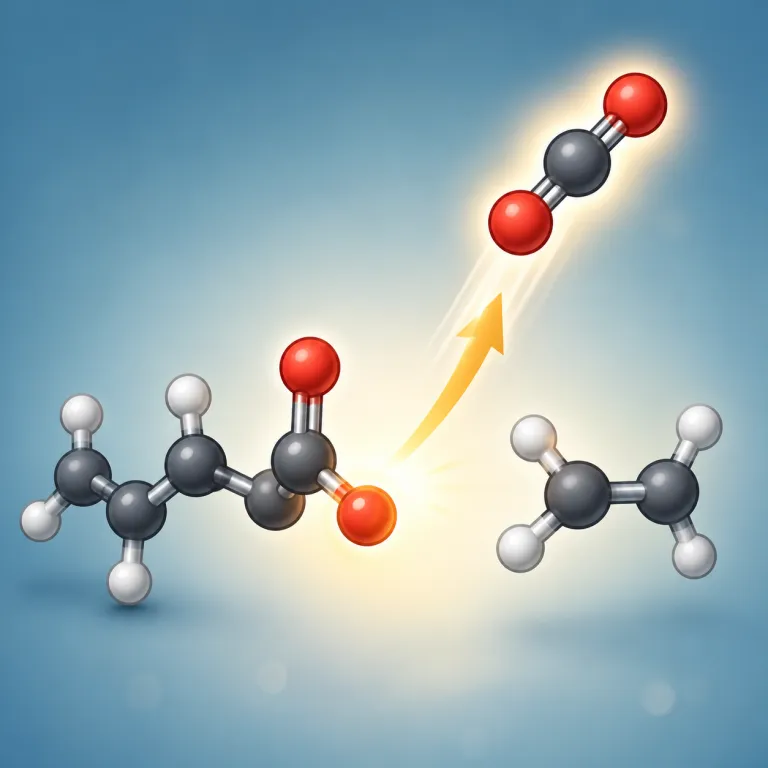
脱炭酸
解説 Definition
化学反応で二酸化炭素を失うプロセス。有機化学の重要な反応。
Decarboxylation is a chemical reaction in which a carboxyl group is removed from a molecule, often releasing carbon dioxide. This term is used in chemistry, biology, and related sciences. It describes a specific technical process rather than a general change.
覚え方のコツ Memory Tip
まず de- は「外す・取り除く」、-ation は「過程・作用」。中央の carboxyl は carboxylic acid や carboxyl group で見る「カルボキシル基」。つまり decarboxylation は「carboxyl を外していく反応」と分解して覚える。化学では CO2 が抜ける場面と結び付けると定着しやすい。反対の carboxylation は「付ける側」、動詞 decarboxylate は「脱炭酸する」なので、語尾違いまでセットで整理すると混同しにくい。
Break it into parts: `de-` means remove, `carboxyl` is the chemical group, and `-ation` means process. So the word means the process of removing a carboxyl group. In chemistry, connect it with `CO2` leaving, and contrast it with `carboxylation`, which adds instead of removes.
例文
Decarboxylation occurs when CO2 is removed from a molecule.
脱炭酸はCO2が分子から除去されるときに発生します。
This decarboxylation reaction is important in brewing beer.
この脱炭酸反応はビール醸造で重要です。
Scientists study decarboxylation to understand metabolic processes.
科学者は代謝プロセスを理解するために脱炭酸を研究します。
decarboxylation の類義語・関連語
類義語
decarboxylation の語源・成り立ち Etymology
近代化学英語で、ラテン語系接頭辞 de-「除く」+ carboxylation から。carboxyl は carbonyl と hydroxyl を組み合わせた語で、「カルボキシル基を外す」ことから脱炭酸の意味になる。関連語は carboxyl、decarboxylate。
Decarboxylation is a modern scientific word made from de-, meaning "remove," and carboxylation. Carboxyl itself was formed from carbonyl and hydroxyl. So the word originally meant the removal of a carboxyl group, and its scientific sense developed directly from that structure-based naming. Related words include carboxyl and decarboxylate.
同じレベルの語彙をもっと
外部辞書で調べる
この英単語をクイズで覚えよう