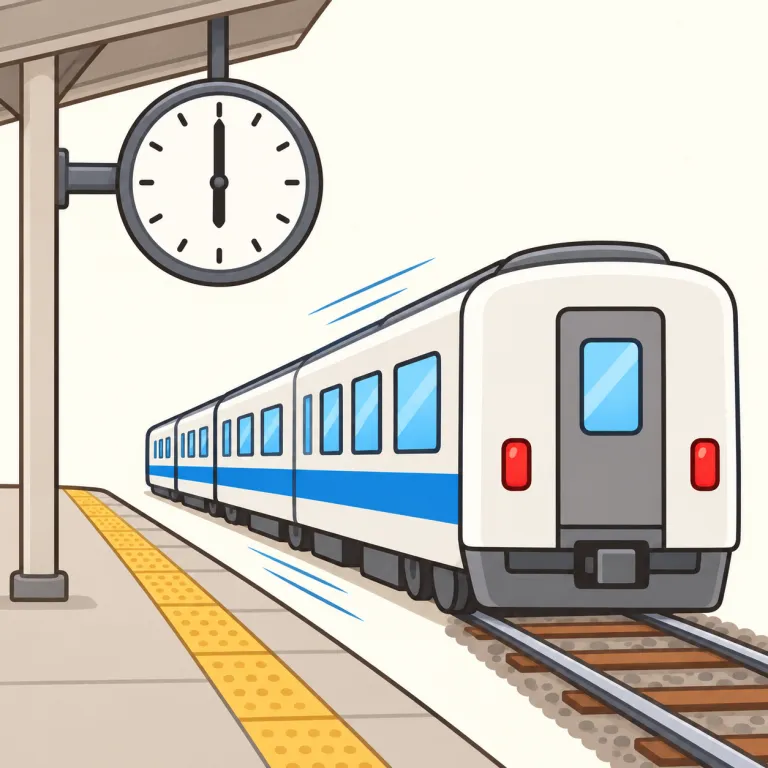
出発します
解説 Definition
departing は depart(出発する)の現在分詞・動名詞です。列車や飛行機、人などがある場所を離れて出発するところを表します。
Departing describes a person, train, aircraft, or other means of transport that is leaving a place or beginning a journey. It is the present participle and gerund form of “depart.”
覚え方のコツ Memory Tip
原形 depart に -ing をそのまま付けた現在分詞・動名詞で、発音の中心は part の部分にある。列車・飛行機・人が場所を離れる場面を思い浮かべ、departing at six、departing for Seoul、departing from the hotel の形で覚える。leave より案内表示や旅行の文脈でやや改まった語である。
Treat departing as the -ing form of depart: because depart does not end in silent e, simply add -ing. The word often appears in formal travel language. Picture a station or airport announcement: a train is departing at six, passengers are departing for Seoul, or guests are departing from a hotel. Notice the useful patterns depart for a destination and depart from a starting point. Leave is more common in everyday conversation, while depart and departing often sound more official or scheduled.
例文
The train is departing at six.
その列車は6時に出発します。
Passengers departing for Seoul should go to Gate 12.
ソウル行きで出発する乗客は12番ゲートへ行ってください。
We are departing from the hotel after breakfast.
私たちは朝食後にホテルを出発します。
departing の類義語・関連語
departing の語源・成り立ち Etymology
古フランス語 departir(分ける・離れる)から。接頭辞 de-(離れて)+ partire(分ける)の構成。part(部分)や partition(分割)も同根語。「ある場所から自分を切り離す」が原義で、出発の意味になった。
Departing is formed from depart plus -ing. Depart entered English through Old French departir, which meant “to divide, separate, or leave.” Its elements ultimately relate to Latin de-, expressing separation, and partire, “to divide or share,” from pars, “part.” The idea was that a person separated from a place or group. That sense developed into the modern meaning of leaving or beginning a journey.
同じレベルの語彙をもっと
外部辞書で調べる
この英単語をクイズで覚えよう