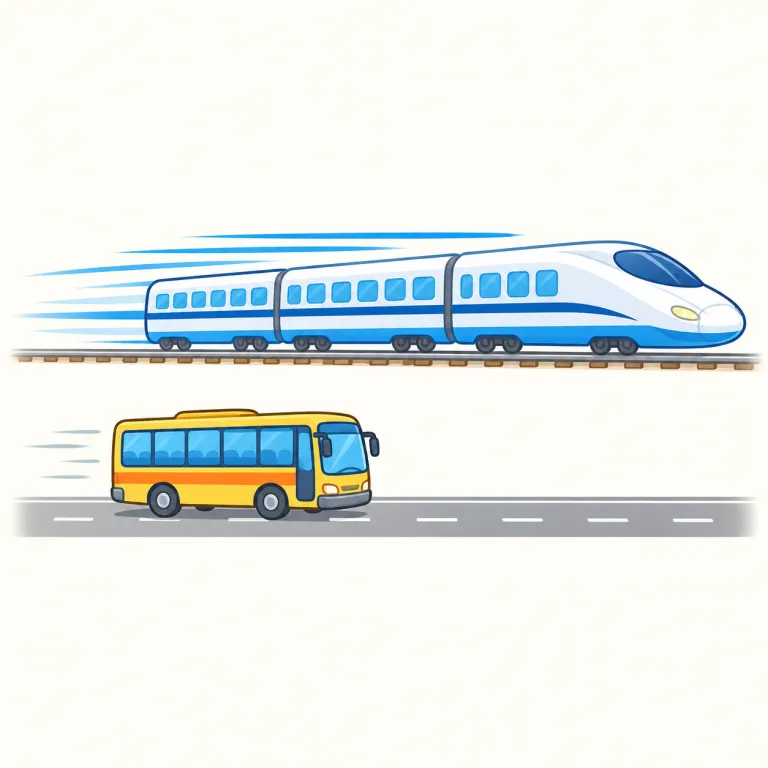
より速く
解説 Definition
faster は fast(速い、速く)の比較級で、より速い、より速くという意味です。二つのものや以前の状態と比べて速度が上がっていることを表します。
Faster is the comparative form of fast and describes someone or something moving, operating, or happening at a greater speed than another person, thing, or earlier state. It may also modify an action to mean “more quickly.”
覚え方のコツ Memory Tip
faster は fast に比較級の -er を付けた形で、語尾を重ねずそのまま加えます。発音は /ˈfæstər/ で、fast より一段速いことを示します。faster than the bus のように than で比較対象を示す用法と、walk faster のように動作の速度を上げる用法を対で覚えます。
Faster is made by adding the comparative ending -er directly to fast; no letter is doubled or removed. It means “at a greater speed” when two things or two states are compared. Use than when the comparison is stated: this train is faster than the bus. The comparison can also be understood from context, as in my computer is faster now. Although faster can describe a noun as an adjective, it also modifies actions in sentences such as please walk faster. Keep the core contrast simple: fast describes speed, while faster means more speed.
例文
This train is faster than the bus.
この電車はバスより速いです。
Please walk faster.
もっと速く歩いてください。
My computer is faster now.
私のコンピューターは今ではより速くなりました。
faster の類義語・関連語
faster の語源・成り立ち Etymology
古英語 fæst(しっかりした、固定された)から派生した fast の比較級。元は「固くつかまる→離れない→断食する/素早い」と意味が分岐した。関連語: fasten(固定する)、breakfast(断食を破る=朝食)。
Faster is the comparative form of fast, created with the native English suffix -er. Fast comes from Old English fæst, whose earlier senses included “firmly fixed” or “secure.” Over time, different uses developed, including the modern speed-related adjective and adverb. The older sense of firmness remains visible in fasten, while another historical branch appears in fasting and breakfast. In current usage, faster straightforwardly compares speed.
同じレベルの語彙をもっと
外部辞書で調べる
この英単語をクイズで覚えよう