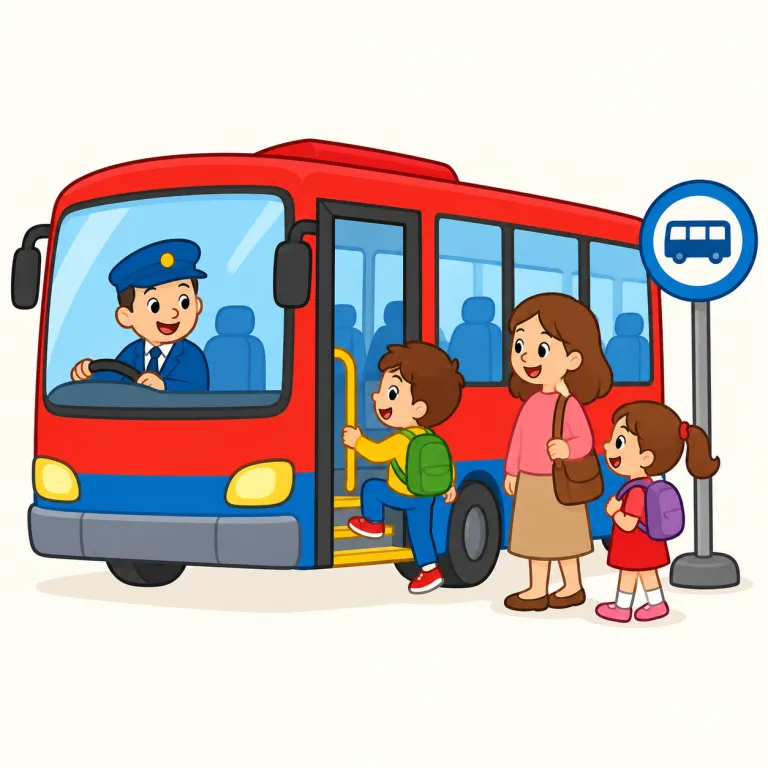
バス
解説 Definition
「bus」は、多くの乗客を運ぶための大型の公共交通機関の乗り物を指します。都市部や郊外で路線が設定されており、停留所で乗り降りすることができます。通勤や通学など日常の移動手段として広く利用されています。
A large road vehicle designed to carry many passengers, usually along a fixed route with designated stops. Buses are commonly used for public transportation between places within a city or region.
覚え方のコツ Memory Tip
bus は omnibus「すべての人のためのもの」を短くした語で、もとは多くの人が一緒に利用できる乗合車を表しました。take the bus「バスで行く」、get on/off the bus「乗る/降りる」、bus stop「バス停」を一組で覚えると実用的です。日本語と同じ音でも、英語では /bʌs/ と短い母音で発音します。
Remember bus as the shortened form of omnibus, a vehicle intended for many people to use. Connect it with common phrases such as take the bus, get on or off the bus, and bus stop. Although the word sounds familiar from Japanese, pronounce it with the short vowel /ʌ/: /bʌs/.
例文
I take the bus to work every morning.
毎朝バスで通勤しています。
The bus was delayed by heavy traffic during rush hour.
ラッシュアワーの渋滞でバスが遅れました。
There is a bus stop right in front of the school.
学校のすぐ前にバス停があります。
bus の類義語・関連語
bus の語源・成り立ち Etymology
ラテン語「omnibus」(すべての人のために)の短縮形。omnis(すべて)の与格複数形で、1820年代フランスの乗合馬車「voiture omnibus」から英語に入った。関連語: omnivore(雑食)、omnipotent(全能)。「万人のための乗り物」が語源。
Bus is a shortened form of omnibus, a Latin word meaning “for all.” In the nineteenth century, French voiture omnibus referred to a public carriage intended for everyone, and English adopted omnibus for the same kind of vehicle. The shortened form bus appeared soon afterward and eventually became the ordinary word for a large public passenger vehicle traveling by road.
同じレベルの語彙をもっと
外部辞書で調べる
この英単語をクイズで覚えよう