鳥、鳥類
noun 名詞主に古風または集合的な言い方で、鳥一般、とくに狩猟対象となる野鳥を指します。現代の日常語では bird が普通で、wildfowl や waterfowl などの関連語にも残っている用法です。
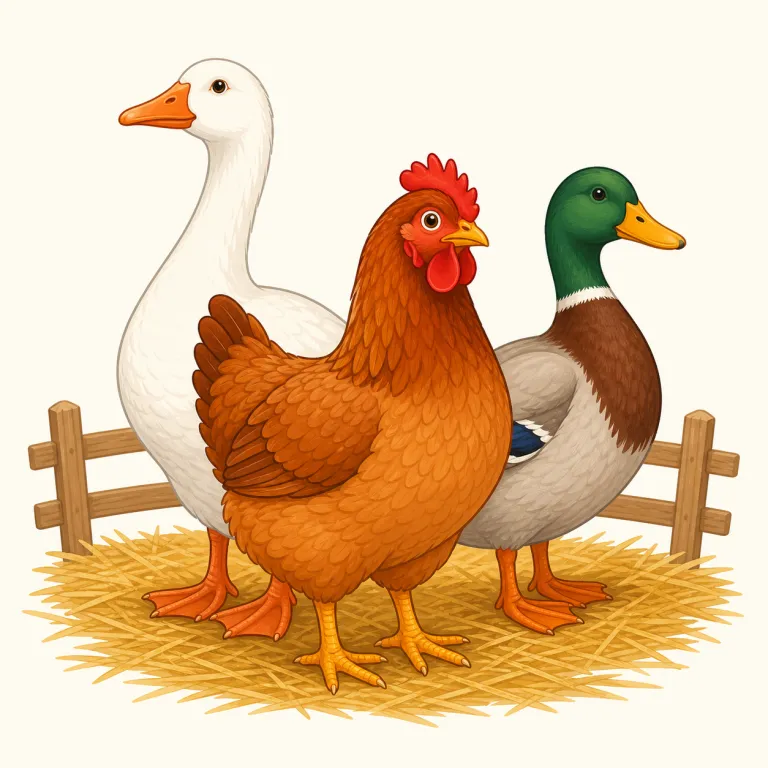
家禽とは、食用や卵生産のために飼育される家畜化された鳥類の総称です。ニワトリ、アヒル、ガチョウ、七面鳥などが該当します。
Fowl are birds that people keep mainly for eggs or meat, such as chickens, ducks, and turkeys. The word can also sometimes mean wild birds used as food or hunted for sport. It is more common in farming, cooking, and formal writing than in everyday conversation.
fowl は bird より少し硬く、農場で飼われる「鳥の家畜」を表す語として覚えると定着しやすいです。会話では chicken, duck, turkey のように個別名で言うことが多く、fowl は分類ラベル寄り。domestic fowl なら家禽、farm fowl なら農場で飼う鳥。poultry は特に食肉・卵用の家禽という産業・食品寄りの語なので、fowl は「飼育される鳥のまとまり」と押さえるとよいです。owl とつづりが少し似るので見間違いにも注意。
`Fowl` is more of a category word than an everyday word like `bird` or `chicken`. It often appears in groups such as `domestic fowl`, `waterfowl`, and `wildfowl`. Also be careful not to mix it up with `owl`, which looks similar.
Fowl such as chickens are raised for eggs and meat.
ニワトリなどの家禽は卵と肉のために飼育されています。
The farm raises various types of fowl.
その農場は様々な種類の家禽を飼育しています。
Raising fowl is an important part of agriculture.
家禽の飼育は農業の重要な一部です。
文脈によって、次の意味でも使われます。
主に古風または集合的な言い方で、鳥一般、とくに狩猟対象となる野鳥を指します。現代の日常語では bird が普通で、wildfowl や waterfowl などの関連語にも残っている用法です。
食用にされる鳥の肉を指し、鶏・アヒル・七面鳥などの肉をまとめて述べる際に使われます。鳥そのものを数える可算名詞ではなく、食材を表す不可算名詞として扱われ、文脈によっては特に鶏肉を意味します。
fowl は古英語 fugol「鳥」に由来し、さらにゲルマン祖語では広く「飛ぶ鳥」を指しました。waterfowl や fowler と同根で、もとは bird 全般だった語義が、後に人が飼う鳥や狩猟鳥へしぼられたため、農場で飼育される鳥の総称である「家禽」と結びつきます。
Fowl comes from Old English fugol, which meant bird, and from an older Germanic word for flying birds in general. In early use, it was much broader than it is now. Later, the meaning narrowed to birds such as domestic poultry or game birds. Related words include waterfowl and fowler.
この英単語をクイズで覚えよう