フランスの、フランス人らしい
adjective 形容詞現代または近世のフランスやフランス人、その文化に関することを表す、やや文語的な形容詞である。Gallic charm や Gallic shrug のように、典型的にフランス的と見なされる特徴を述べる際にも使われる。
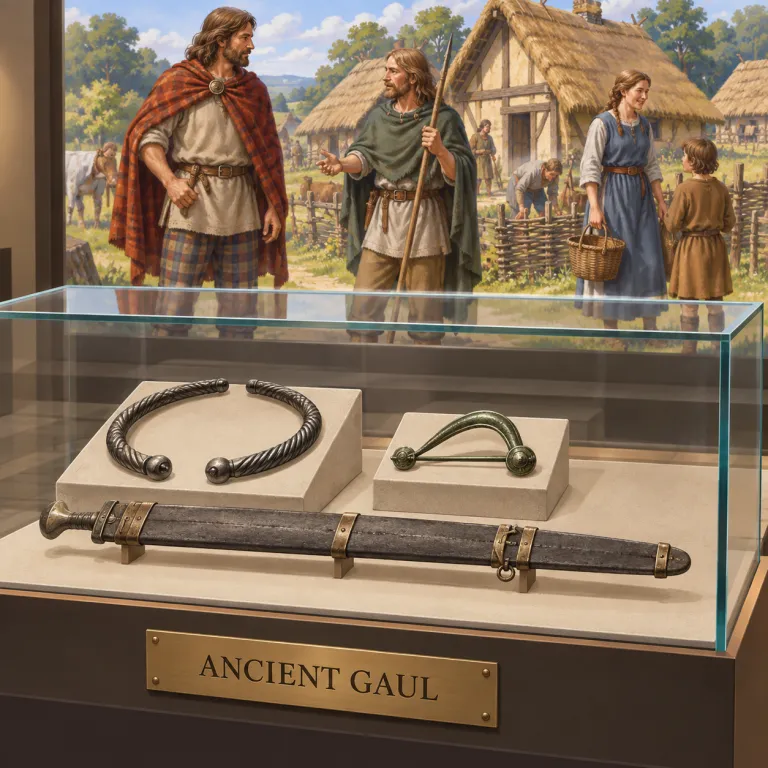
古代ガリア地方(現在のフランス付近)の文化や人々に関すること。
Gallic means relating to France, the French people, or French culture and style. It is a fairly formal word and is often used in writing about history, manners, or national character.
gallic は、big や local のような普通の形容詞ではなく、Roman / Greek と同じく「古代の地域・民族に関する」と読むと覚えやすい語です。文脈では Gallic tribes, Gallic wars, Gallic culture のように、ローマと接した古代ガリアの歴史・部族・文化と結びつくことが多め。現代フランス風の意味に寄る場合もありますが、この行ではまず「ガリアの」を主軸にする。つづりは garlic と非常に紛らわしいので、「gallic には r がない」とセットで固定すると記憶に残ります。
Link Gallic to Gaul, the old Roman name for that region, not to a modern country word. You will often see it in history phrases like "Gallic Wars" or "Gallic tribes," so store it as a museum or textbook word. Do not mix it up with Gaelic or Celtic, which refer to different groups.
The historian described the Gallic tribes that resisted Roman conquest under Julius Caesar.
その歴史家は、ユリウス・カエサル率いるローマ軍の征服に抵抗したガリアの部族について述べました。
The museum displayed Gallic weapons found near an ancient settlement.
その博物館は、古代の集落の近くで見つかったガリアの武器を展示しました。
Gallic culture blended with Roman traditions after the conquest of ancient Gaul.
古代ガリアの征服後、ガリア文化はローマの伝統と融合しました。
文脈によって、次の意味でも使われます。
現代または近世のフランスやフランス人、その文化に関することを表す、やや文語的な形容詞である。Gallic charm や Gallic shrug のように、典型的にフランス的と見なされる特徴を述べる際にも使われる。
「gallic」はラテン語 Gallicus「ガリアの」から来ており、Gall- は古代ローマが Gallia と呼んだ地域を指す。つまり本来は「古代ガリアに属する・ガリア人の」という地名由来の語で、Gaul や Gallican にも同じ地名の記憶が残る。
Gallic comes from Latin Gallicus, meaning "of Gaul." Gaul was the Roman name for the region linked with ancient France, so the word later came to mean "French" or "French-like." Related words such as Gaul and Gallican keep the same place-name root.
この英単語をクイズで覚えよう