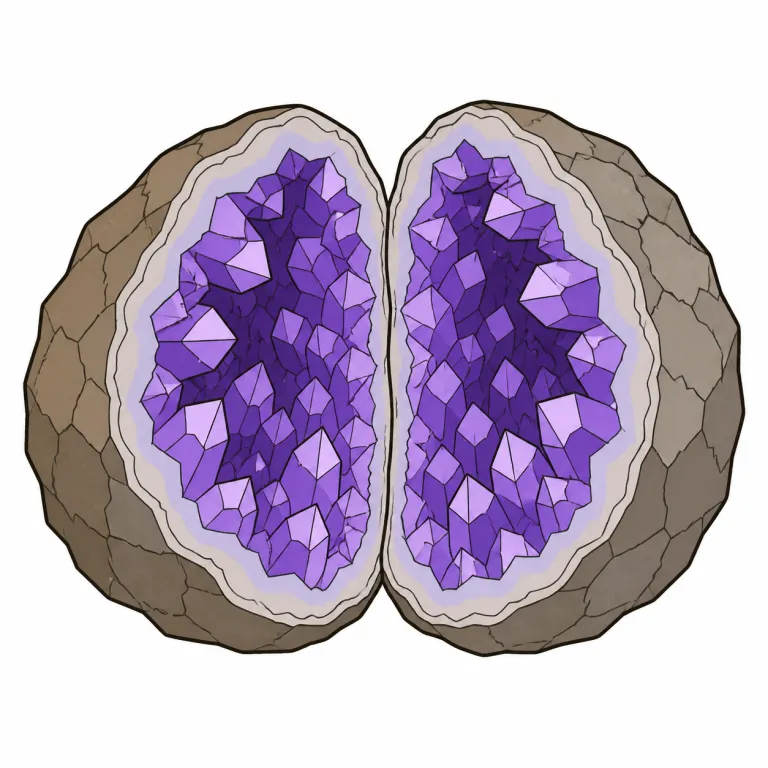
晶洞
解説 Definition
内部が空洞になっており、その内壁に結晶や鉱物が形成された岩石または岩塊。一般に球状または卵形で、外見は普通の岩石のようだが、割ると内部の結晶が現れる。
A geode is a round or hollow rock that has crystals or mineral material inside. It is a term used in geology and when talking about natural stones. From the outside it may look plain, but the inside is often colorful or shiny.
覚え方のコツ Memory Tip
geo- を geology, geography のような「地・岩に関する語」の仲間として押さえると、geode もまず“石の何か”だと寄せられます。覚える軸は「外はただの石、中は空洞+結晶」。crystal や gem は中身そのものを指しやすいのに対し、geode は“割る前の殻ごとの石”を指す語です。break open a geode, a geode filled with crystals のような形で、標本店や博物館で石を割って中を見せる場面と結びつけると、見た目は地味で中に宝を隠す石、という像で残りやすくなります。
The part geo- appears in words about the earth, like geology and geography, so geode is clearly a rock word. The memory picture is simple: plain outside, hidden crystals inside. Think of a museum or shop breaking open a stone to reveal something bright.
例文
The geode was cut open to reveal beautiful purple amethyst crystals.
晶洞を割ると、美しい紫色のアメジスト結晶が現れました。
Rock collectors often search for geodes in geological formations.
岩石収集家は、地層の中から晶洞を探すことがよくあります。
This geode contains sparkling quartz crystals inside its hollow cavity.
この晶洞の空洞内には、輝く石英結晶が含まれています。
geode の語源・成り立ち Etymology
フランス語 géode から入り、さらにラテン語 geodes、古代ギリシャ語 geodes「土のような」に由来します。ge- は「地・大地」の語根で、外見はただの土っぽい石なのに中に結晶を隠す晶洞の姿に、語源の感覚がよく表れています。関連語は geology、geography。
Geode came into English from French `géode`, which goes back through Latin to Greek `geodes`, meaning "earthlike." The root `ge-` means "earth" or "ground," the same root seen in `geology` and `geography.` The word fits the idea of a rough, plain stone that looks earthy outside but has crystals hidden inside.
同じレベルの語彙をもっと
外部辞書で調べる
この英単語をクイズで覚えよう