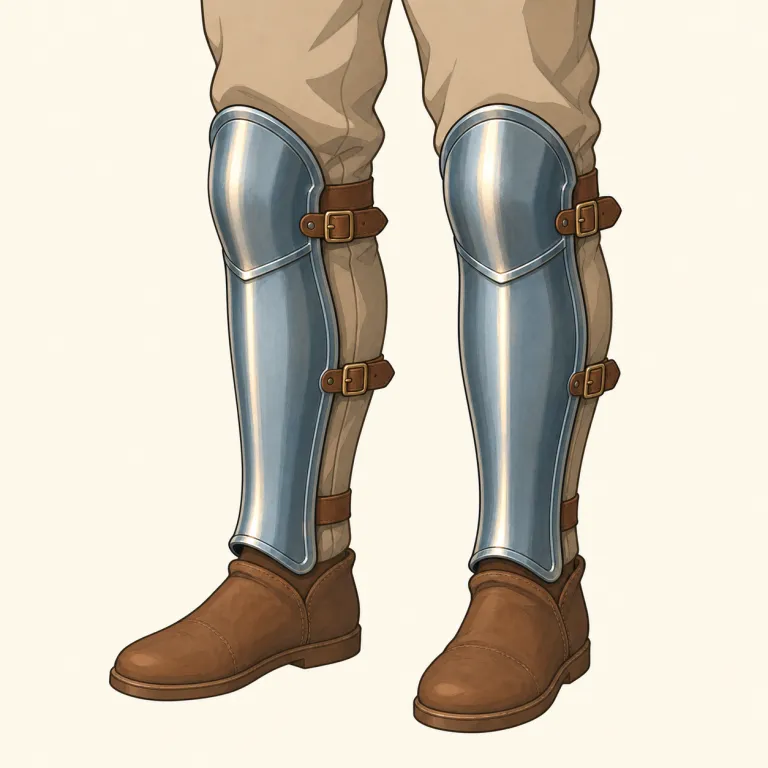
すね当て
解説 Definition
すね当ては、すねを衝撃から守るために着用する防具の一種です。特に古代や中世の戦士や騎士が、鎧の一部として金属や革製のすね当てを装着していました。現代のスポーツ用の shin guards とは近い発想ですが、greaves は主に鎧の文脈で使われる語です。
Greaves are pieces of armor that protect the lower legs, especially the shins. They are usually worn by soldiers, knights, or in historical and fantasy settings. The word is mostly used in history, literature, and discussions of protective equipment.
覚え方のコツ Memory Tip
まず「防具の複数形っぽい -s」に反応できるようにする。greaves は実際に左右の脚につけることが多く、gloves や boots のようにペアで意識すると残りやすい。armor の話なら「鎧のすね部分」と結びつける。helmet が頭、gauntlets が手、greaves がすね。grease とはつづりも意味も別なので混同しない。
Notice the `-s`: `greaves` is usually plural, like `gloves` or `boots`, because you wear them on both legs. Put it with other armor words: `helmet` for the head, `gauntlets` for the hands, `greaves` for the lower legs. Do not mix it up with `grease` - the spelling and meaning are different.
例文
The museum exhibit displayed polished greaves that had once protected a medieval knight's legs.
博物館の展示では、中世の騎士の脚を守っていた磨かれたすね当てが飾られていた。
The warrior strapped on greaves before entering the reenactment arena.
その戦士は模擬戦の舞台に入る前にすね当てを装着した。
He adjusted the leather greaves before stepping into the reenactment arena.
彼は模擬戦の舞台に入る前に、革製のすね当てを調整した。
greaves の語源・成り立ち Etymology
greaves は中英語 greves を経て、古フランス語 greve「すね・すね当て」に由来し、接辞より語幹 greve が意味の核です。単数形 greave や同系の greve を見ると、「すね」という部位名がそのまま防具名になり、すねを守る物だと腑に落ちます。
Greaves comes from Middle English greves, from Old French greve, meaning "shin" or "shin armor." The core idea was the shin itself, and then the word came to mean the armor that protects that part of the leg. The singular form greave shows the same history clearly.
同じレベルの語彙をもっと
外部辞書で調べる
この英単語をクイズで覚えよう