関与している
解説 Definition
字面では物事に自分の手を入れて動かしている様子を思わせるが、実際は「関与している」という意味で使う。計画、事件、作品に参加または影響したと言う場面に出やすく、良い関与にも悪い関与にも使える中立的表現。
This idiom uses a concrete image, but the usual meaning is not literal. It means to be involved in something. People use it in contexts like the examples, and the tone is figurative and natural in everyday English.
覚え方のコツ Memory Tip
この表現は、まず物事に自分の手を入れて動かしている様子を映像として思い浮かべると覚えやすいです。身体の一部は英語の慣用句で感情、判断、関係、行動の比喩になりやすく、ここでは字面通りの体の話から離れて「関与している」へ意味が移ります。例文では人や組織を主語にし、be、have、get、give など基本動詞の近くに置かれることが多いので、前後の型ごと覚えると使い分けやすくなります。似た身体表現と混同せず、一つの固定したまとまりとして意味を取るのが重要です。
Start with the picture in the words, then move to the idea behind it. Many English body idioms turn physical feelings, posture, or action into ideas about emotion, judgment, help, or trouble. Learn the phrase as one fixed unit with its common verb, because translating each word can mislead you.
例文
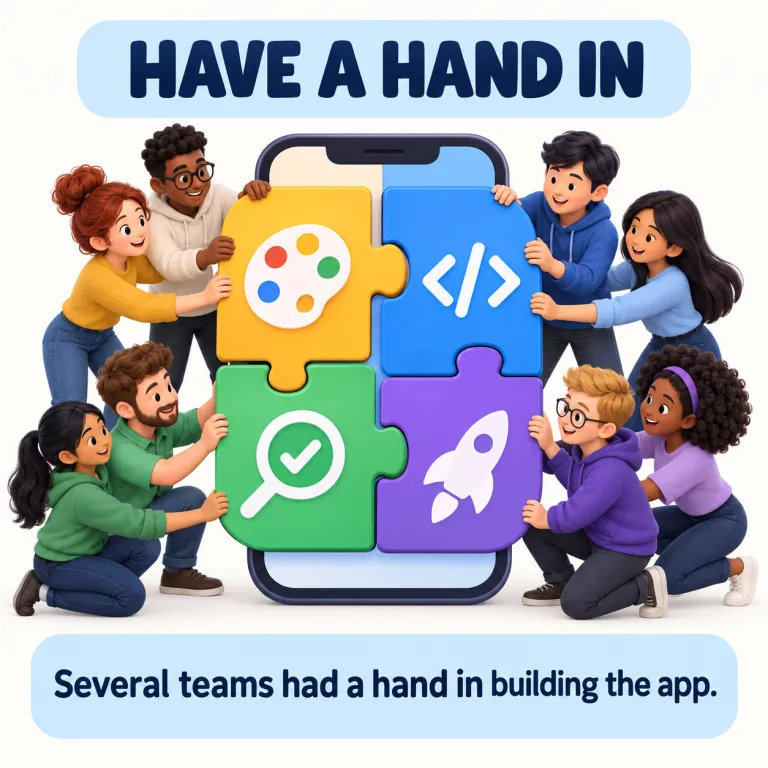
Several teams had a hand in building the app.
複数のチームがそのアプリ作りに関与していた。
Did he have a hand in the decision?
彼はその決定に関与していたのですか。
Prosecutors claim the group had a hand in the attack.
検察はその集団が攻撃に関与していたと主張している。
have a hand in の語源・成り立ち Etymology
由来は古い生活感覚や身体比喩に基づく表現で、物事に自分の手を入れて動かしている様子という具体的な場面が出発点です。その見た目や感覚を抽象化し、現在の「関与している」という意味で定着しました。身体感覚を抽象語へ移す英語らしい発想です。
This expression grew from a concrete image in everyday speech. Over time, speakers used that image for a wider idea, and the phrase became fixed as an idiom.
同じレベルの語彙をもっと
外部辞書で調べる
この英熟語をクイズで覚えよう